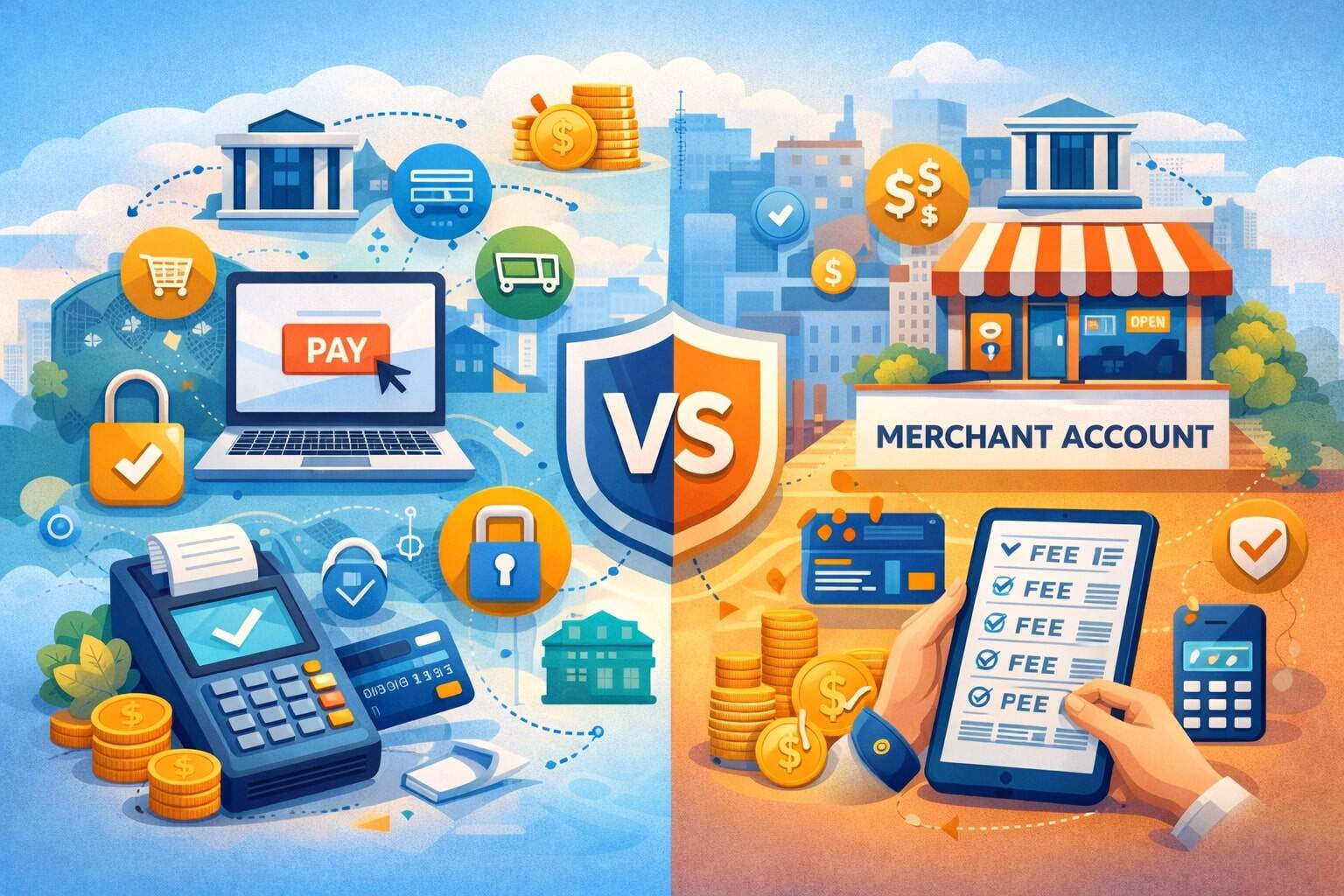
If you accept cards online, you’ll eventually run into the same confusion: payment gateway vs merchant account—are they the same thing, do you need both, and why do some providers bundle everything into one checkout button?
Here’s the simplest way to think about it. A payment gateway is the technology layer that securely captures payment details and routes transaction data to the right parties for approval.
A merchant account is the financial account (set up through an acquiring bank/processor relationship) that temporarily holds card payments before funds are deposited into your business bank account.
In practice, modern providers often combine these pieces, which is why the “payment gateway vs merchant account” conversation can feel messy.
This guide breaks down how each component works, what you actually need for different business models, how underwriting and fees really behave, and what’s changing next (including instant payments and new compliance expectations).
What a Payment Gateway Is and What It Actually Does
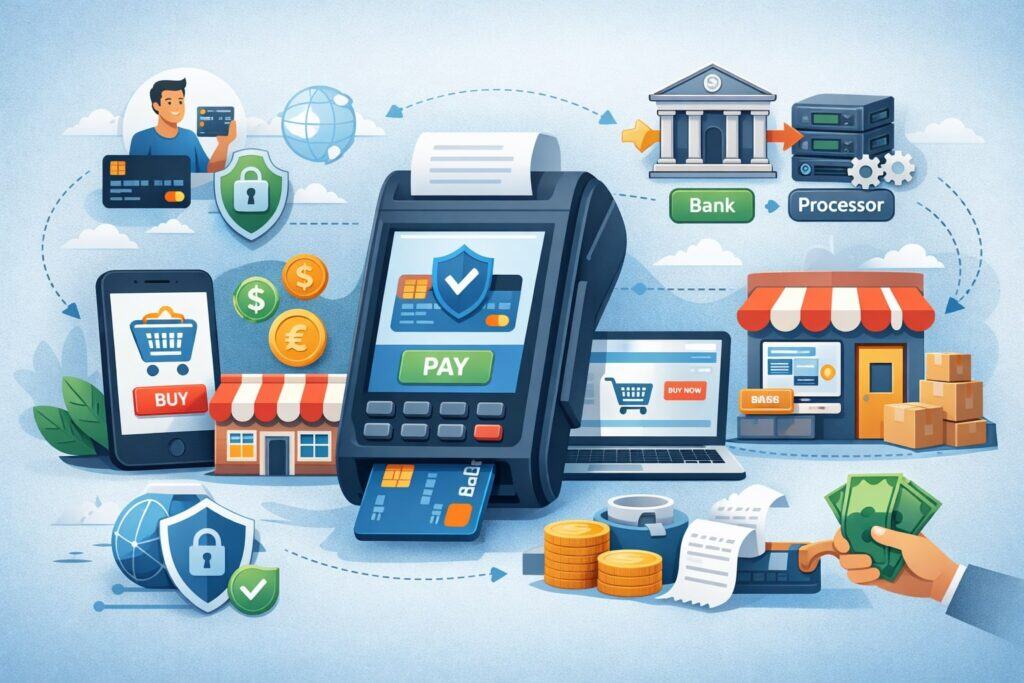
A payment gateway is the infrastructure that connects your checkout (website, app, invoice link, or virtual terminal) to the broader payments ecosystem. In the “payment gateway vs merchant account” discussion, the gateway is the piece most people see because it lives in the checkout experience.
At a technical level, a payment gateway typically handles: encrypting and transmitting payment data, formatting transaction requests, routing transactions to a processor/acquirer, supporting features like tokenization (saving a card without storing raw card numbers), and returning real-time responses (approved/declined).
It can also orchestrate additional steps such as address verification, CVV checks, 3-D Secure authentication, and fraud screening rules before the transaction is finalized.
A gateway can be fully hosted (customers are redirected or shown an embedded hosted payment page) or API-based (you build your own checkout UI while the gateway handles the secure transport and compliance-friendly handling of card data).
Gateways also tend to manage “payment method sprawl”—cards, ACH, wallets, buy-now-pay-later, and alternative rails—through a single integration.
What a Merchant Account Is and Why It Exists
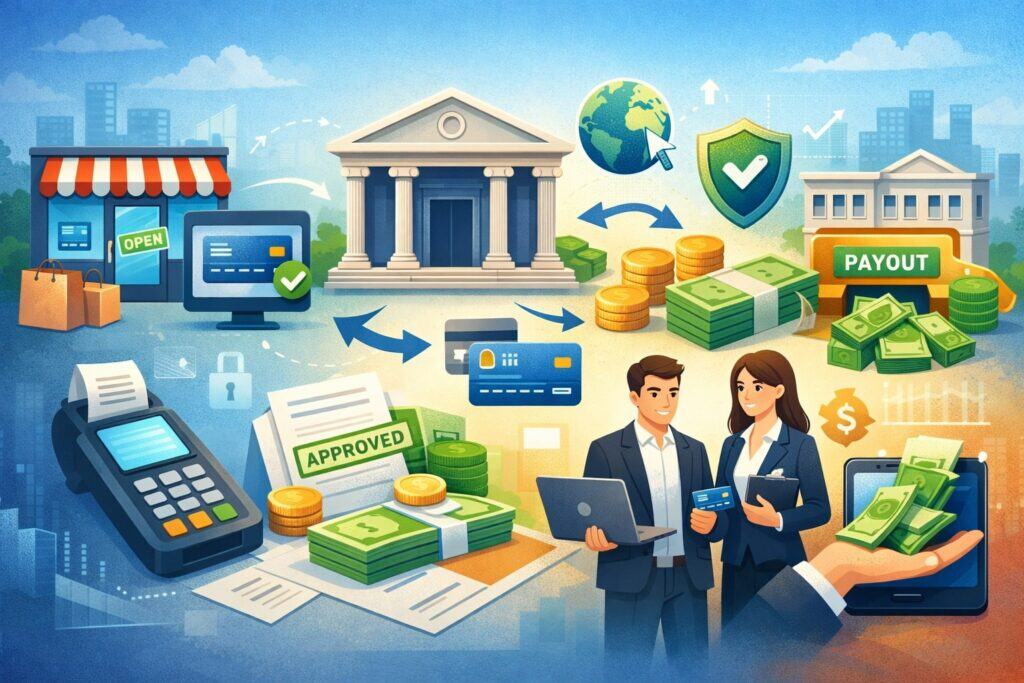
A merchant account is a special type of account used in card processing that sits between approved card transactions and your business bank deposit.
In the “payment gateway vs merchant account” debate, the merchant account is the part that most business owners don’t interact with directly—until something goes wrong (delays, reserves, chargebacks, or underwriting reviews).
When a customer’s card is approved, the funds don’t instantly land in your bank account. They flow through a card settlement process and are typically placed into the merchant account (or a ledger equivalent) before being paid out to you.
The merchant account is tied to an acquiring relationship, and it’s where the processor/acquirer applies risk controls, disputes handling, and settlement rules.
Merchant accounts can be:
- Dedicated merchant accounts: your business has its own underwriting file and processing profile (often better control, more stability, more negotiable terms once established).
- Aggregated (sub-merchant) setups: your business processes under a master merchant account owned by a payment service provider (PSP). You still “have an account,” but it may function more like a sub-ledger with standardized rules.
Why does this matter? Because merchant accounts are heavily tied to risk and underwriting. Things like your industry, refund policy, shipping timelines, average ticket size, and chargeback exposure can influence approvals, rolling reserves, or payout timing.
So in payment gateway vs merchant account terms: the merchant account is the regulated, risk-managed financial plumbing that enables card acceptance and settlement.
The Full Payment Flow: Where the Gateway Stops and the Merchant Account Starts
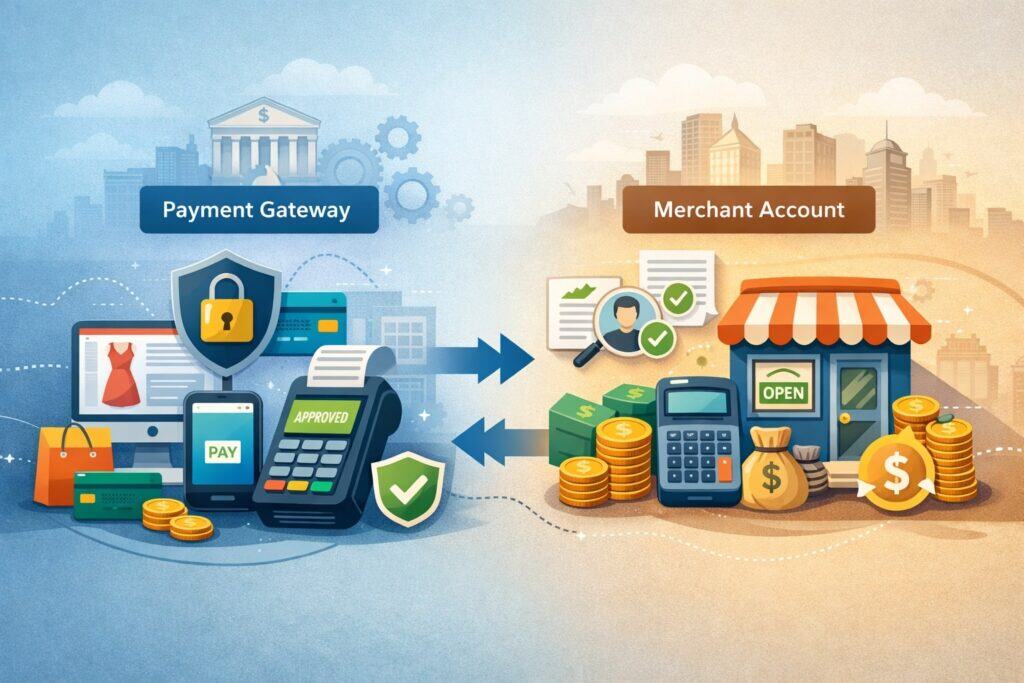
Understanding the “payment gateway vs merchant account” difference becomes easy once you see the lifecycle of a transaction end-to-end.
Step 1: Checkout and Data Capture
At checkout, the payment gateway collects payment credentials (card details or bank info) and converts them into a secure, compliant transaction request. The gateway may tokenize the card so your system never stores sensitive data. It can also trigger fraud checks and authentication flows to reduce risk.
This stage is mostly data movement and risk signaling, not the actual movement of funds.
Step 2: Authorization
The authorization request is routed through the processor/acquirer to the card network and then to the issuing bank (the customer’s bank). The issuer approves or declines based on available funds, fraud models, and account status.
The gateway is responsible for: packaging the request, passing required data elements, and relaying the response back to your checkout. The merchant account is responsible for: being the acquiring endpoint that’s allowed to submit that transaction for authorization.
Step 3: Capture and Settlement
After authorization, you capture the funds (immediately or later). Once batches settle, funds move through the acquiring side and are posted into your merchant account (or PSP ledger equivalent). Then payouts are sent to your business bank account on a schedule (daily, next-day, weekly, or faster depending on provider and risk profile).
This is where the merchant account matters most: settlement rules, chargeback exposure, reserve policies, and payout controls live here.
So if you’re mapping payment gateway vs merchant account: the gateway is dominant in steps 1–2, and the merchant account dominates steps 2–3 (and everything after, including disputes).
Payment Gateway vs Merchant Account: The Core Differences That Affect Your Business
When people ask “payment gateway vs merchant account,” they’re usually trying to solve one of five real problems: cost, approvals, payout speed, risk holds, or platform flexibility. Here are the differences that actually impact outcomes.
Ownership and Control of Funds
A dedicated merchant account structure typically provides clearer control and traceability over settlements and can be more negotiable over time. In aggregated PSP structures, the provider often has broader discretion over holds and may standardize risk thresholds across many sub-merchants.
This doesn’t mean one is “better.” It means your tolerance for standardized rules vs negotiated terms matters.
Underwriting Depth and Approval Stability
Merchant accounts are tied to underwriting. For many businesses, underwriting is light-touch at first. For higher-risk profiles (high ticket, subscription-heavy, long fulfillment, or elevated chargeback categories), underwriting becomes more rigorous and may include documentation, financial statements, processing history, and ongoing monitoring.
Reserve practices (like rolling reserves) are commonly used as a risk control, sometimes withholding a percentage of sales for a period to cover potential losses. Many providers describe rolling reserves as a standard tool, often expressed as a percent held for a defined number of days.
Integration Flexibility and Checkout Experience
Gateways vary wildly. Some are simple “drop-in” checkouts. Others provide deep API control, advanced tokenization, multi-PSP routing, and subscription orchestration. Your gateway choice affects conversions, mobile performance, retries for failed payments, and the ability to support multiple payment methods without rebuilding checkout later.
Fraud, Chargebacks, and Dispute Workflows
Gateways can help reduce fraud through data enrichment and authentication flows, but chargebacks are processed and debited through the acquiring side (merchant account structure). Your merchant account setup influences how disputes are handled, what evidence is requested, and how quickly you’re notified.
Fees and Pricing Visibility
In the “payment gateway vs merchant account” decision, many businesses underestimate how much pricing models differ. Gateways may charge per-transaction fees, monthly fees, tokenization fees, or advanced fraud tool fees.
Merchant account pricing may include interchange, assessments, processor markup, chargeback fees, monthly minimums, and batch fees. Bundled PSP pricing can look simpler but may hide tradeoffs in payout timing, reserves, and support.
Pricing Explained: How Gateways and Merchant Accounts Make (and Cost) Money
Pricing is where “payment gateway vs merchant account” becomes painfully real, because the same $100 sale can net different deposits depending on your setup, industry, and risk profile.
Typical Cost Layers You’ll See
- Interchange: set by card networks/issuers and varies by card type and transaction details.
- Assessments and network fees: network-related costs.
- Processor/acquirer markup: the provider’s margin and risk pricing.
- Gateway fees: the technology layer, sometimes separate, sometimes bundled.
- Risk and exception fees: chargebacks, retrievals, high-risk program fees, or reserve impacts.
With a dedicated merchant account, you may see pricing like interchange-plus, where interchange is passed through and the provider adds a transparent markup. With bundled PSP pricing, you may see flat-rate pricing that includes an averaged risk and cost assumption.
Why Your Business Model Changes the Math
- Subscriptions increase failed payment retries, disputes, and fraud exposure if billing descriptors and cancellation flows aren’t optimized.
- High average ticket increases exposure per dispute.
- Long fulfillment increases the window for chargebacks.
- Card-not-present transactions are generally higher-risk than in-person transactions.
In other words, “payment gateway vs merchant account” isn’t just a technical choice. It’s a risk pricing choice. The setup that looks cheapest at 100 transactions/month may not be cheapest at 10,000 transactions/month—or during a seasonal spike where fraud attempts surge.
Practical Tip
When comparing providers, ask for an “effective rate” estimate based on your real mix: average ticket, card mix, refund rate, and chargeback history. Otherwise, you’ll compare marketing numbers instead of real deposits.
Security and Compliance: What’s Changed Recently and What’s Coming Next

Security is the hidden sixth pillar of “payment gateway vs merchant account,” because gateways and merchant accounts share responsibility for protecting card data—but the obligations differ depending on how you integrate.
PCI DSS 4.0 and Why Gateways Matter More Now
PCI DSS 4.0 introduces updated requirements and includes future-dated items that became mandatory by March 31, 2025 in many compliance paths. A gateway that supports tokenization, hosted fields, or hosted checkout can reduce your exposure to sensitive data and help keep your compliance scope smaller.
If you handle raw card data directly (even briefly), your compliance obligations expand dramatically. That’s why many businesses choose gateway approaches that avoid direct handling of card numbers.
EMV 3-D Secure (3DS) Evolution
For online card payments, EMV 3-D Secure continues to evolve. EMVCo has published EMV 3DS version 2.3 updates and supporting implementation documents.
The practical takeaway is that modern authentication is increasingly designed to reduce friction (less redirect pain) while improving issuer confidence through richer data sharing and more flexible authentication options.
Gateways often provide the 3DS rails and logic. Your merchant account/acquiring setup determines how liability shifts and how disputes are managed after authentication.
Tokenization, Network Tokens, and “Storing Cards” Safely
Tokenization is no longer optional for many serious online businesses. The gateway typically issues tokens for your vault, and in advanced setups may support network tokenization for better authorization rates and lower fraud exposure.
Even if you don’t care about the jargon, you care about outcomes: fewer declines, fewer stolen card attempts, smoother recurring billing.
In “payment gateway vs merchant account” terms: gateways increasingly carry the security innovation, while merchant account structures enforce risk controls and settlement rules.
Which Setup You Need: Common Business Scenarios and Best Fits
The best answer to “payment gateway vs merchant account” depends on how you sell, how you deliver, and how much operational control you need.
E-Commerce Stores Selling Physical Goods
Most e-commerce stores need a gateway that supports: fast checkout, wallet options, address verification, fraud controls, and easy refunds. Merchant account needs depend on: shipping times, return rates, and ticket size.
If you’re stable and scaling, a dedicated merchant account can provide negotiating leverage and potentially better long-term control.
Service Businesses, Invoicing, and Virtual Terminals
Service businesses often need: invoice links, card-on-file tokens for repeat clients, and a virtual terminal. Here, the gateway experience and reporting matter as much as the merchant account. Disputes often come down to documentation quality, clear descriptors, and consistent customer communication.
Subscription and Membership Billing
Subscriptions put recurring token management and retry logic front and center. Gateways that support smart retries, account updater tools, and detailed decline reasons can materially improve revenue.
Merchant account structure matters because subscription businesses can trigger higher risk scrutiny when cancellation flows are unclear or chargebacks rise.
Platforms and Marketplaces
If you’re paying out to multiple sellers, the “payment gateway vs merchant account” decision becomes an architecture decision. You may need marketplace tooling: onboarding, KYC/KYB, split payments, escrow-like holds, and controlled payout timing. Many businesses use a PSP model here because it reduces complexity—at the cost of standardized controls.
Higher-Risk Categories
If your category is considered higher-risk (due to dispute rates, fulfillment windows, or regulatory sensitivity), the merchant account underwriting and reserve policies will be more prominent. Rolling reserves and delayed payouts are common risk tools.
The gateway still matters (fraud tooling, 3DS support, tokenization), but underwriting and ongoing monitoring will shape your day-to-day experience.
How to Choose: A Practical Checklist for Comparing Providers
When businesses search “payment gateway vs merchant account,” they’re often really asking: “How do I stop switching providers every year?” The best way is to evaluate the relationship like infrastructure, not like a plug-in.
1) Underwriting Transparency
Ask what triggers: reserves, delayed payouts, volume caps, or sudden reviews. Ask what documents they require at onboarding and what they may request later (bank statements, fulfillment proof, supplier invoices). A provider that can clearly explain their risk model is usually easier to work with.
2) Payout Timing and Settlement Rules
Ask how quickly funds are deposited, what causes exceptions, and whether weekends/holidays affect timing. If cash flow is tight, payout reliability matters more than a few basis points in fees.
3) Gateway Capabilities You’ll Need in 12–24 Months
Even if you’re small now, plan ahead: subscriptions, wallets, ACH, token vaulting, multi-location reporting, or multiple websites. Migrating gateways later can be painful because tokens and customer payment methods may not transfer cleanly.
4) Support, Disputes, and Evidence Workflow
Chargebacks are operational. You want clear dashboards, fast alerts, and a straightforward way to submit evidence. Ask what data they provide, how disputes are filed, and how long you have to respond.
5) Contract Terms and Exit Costs
Even when you love a provider, you should understand: term length, early termination fees, PCI fees, gateway monthly fees, and any minimums. The “payment gateway vs merchant account” decision should include a clean exit strategy in case your business model changes.
Future Predictions: Where Payment Gateways and Merchant Accounts Are Heading
The “payment gateway vs merchant account” distinction will keep blurring—but the underlying functions won’t disappear. Instead, they’ll become more automated, more real-time, and more compliance-driven.
Instant Payments and Faster Payout Expectations
Instant payment rails are expanding and influencing what merchants expect for settlement speed. The Federal Reserve launched FedNow in July 2023 and reported continued growth in participation by mid-2025.
While card settlement still follows its own model, customer expectations are moving toward “faster money,” which pressures providers to offer quicker payouts, more flexible funding options, and better cash flow tools.
Smarter Authentication and Lower-Friction Fraud Controls
EMV 3DS improvements reflect a larger trend: more data-driven authentication that’s less annoying for customers, but stronger against fraud. Gateways will increasingly auto-orchestrate authentication, route transactions intelligently, and tune fraud rules using adaptive models.
Tokenization Everywhere
Expect deeper tokenization (including network token strategies) to become default. This helps reduce sensitive data exposure, improves authorization rates for recurring billing, and reduces fraud losses.
More Compliance Automation
With PCI DSS 4.0 expectations now in force (including requirements becoming mandatory by March 31, 2025 in many cases), providers will keep pushing merchants toward lower-scope integrations (hosted fields, hosted checkout, token vaults) and away from handling raw card data.
FAQs
Q.1: Do I need both a payment gateway and a merchant account?
Answer: In most online card acceptance setups, yes—functionally you need both capabilities. You need a payment gateway to securely capture payment details and send authorization requests, and you need a merchant account (or equivalent acquiring ledger) to settle those approved transactions and pay you out.
What changes is whether you buy them separately or as a bundle. Some providers sell a gateway and pair it with your merchant account.
Others provide an all-in-one stack where the gateway is included and the merchant account layer is abstracted. That’s why “payment gateway vs merchant account” can look like a debate when it’s really a packaging question.
The decision comes down to control and risk. Bundled stacks can be simpler to start with and faster to integrate. Separate gateway + dedicated merchant account setups can offer more customization, negotiable pricing at scale, and potentially more portability if you need to switch components later.
If recurring billing, multiple sales channels, or complex fraud controls are in your roadmap, prioritize gateway capabilities. If cash flow stability, underwriting clarity, and dispute handling are your pain points, prioritize merchant account terms.
Q.2: What’s the difference between a payment gateway and a payment processor?
Answer: This is a classic “payment gateway vs merchant account” adjacent confusion. A payment gateway is primarily the technology that captures and transmits payment data securely. A payment processor is the service that routes transactions through acquiring connections and coordinates settlement, reporting, and operational processing.
In real life, many companies are both. Some gateways also provide processing. Some processors include a gateway. But when separated, you can think of it like this: the gateway is your secure checkout pipeline; the processor is the traffic controller that moves transactions through the networks to issuers and back.
Why it matters: if you outgrow your provider, swapping processors can be easier than swapping gateways—especially if your gateway stores your customer tokens.
On the other hand, processor choice can influence approval rates, chargeback tooling, payout schedules, and risk decisions. So when comparing providers, don’t just ask “Do you have a gateway?” Ask: “Who is the processor, who is the acquirer, and how are disputes and funding handled?”
Q.3: Why do some providers hold funds or require a rolling reserve?
Answer: Holds and reserves usually come from risk controls in the merchant account/acquiring layer, not the gateway layer—another reason the “payment gateway vs merchant account” difference matters.
A rolling reserve is commonly described as a percentage of sales withheld for a set period to cover potential future disputes, refunds, or fraud losses.
Providers may apply reserves when a business has limited history, high ticket sizes, a long delivery window, elevated chargeback exposure, or rapid volume changes. Even healthy businesses can trigger reviews if volume spikes suddenly or if refund rates change.
To reduce reserve risk, focus on: clear billing descriptors, fast customer support, transparent policies, shipping and delivery proof, and proactive refund handling.
Also, keep clean documentation ready: supplier invoices, tracking data, and customer communications. The more predictable your risk profile appears, the more likely you can negotiate better terms over time.
Q.4: Is a hosted checkout safer than an API integration?
Answer: Often, yes—from a compliance scope perspective. Hosted checkout or hosted fields can reduce how much sensitive card data touches your systems, which typically reduces your PCI compliance burden.
This matters more now because PCI DSS 4.0 brought updated expectations, including requirements becoming mandatory by March 31, 2025 for many compliance paths.
That said, “safer” depends on implementation quality and operational controls. An API integration can still be secure if you tokenize properly, avoid storing raw data, follow secure coding practices, and use strong access controls.
Hosted solutions usually reduce your attack surface because you’re outsourcing the most sensitive handling to a specialized provider.
If you have a small dev team, hosted approaches can be a smart default. If checkout conversion optimization and custom UX are critical, an API approach can be worth it—just treat security as a first-class feature, not an afterthought.
Q.5: How do I choose the best option for long-term growth?
Answer: For long-term growth, the best “payment gateway vs merchant account” choice is the one that minimizes forced migrations. Switching providers is rarely just flipping a switch—especially if you store customer tokens for subscriptions or one-click checkout.
Start with your growth constraints:
- If you expect subscriptions, prioritize gateway features: token vaulting, retries, account updater support, and flexible billing logic.
- If you expect higher volumes, prioritize merchant account terms: transparent pricing, stable underwriting, clear dispute workflows, and predictable funding.
- If you’re building multi-channel (online + in-person), prioritize unified reporting and consistent fraud controls across channels.
- If cash flow is tight, prioritize payout reliability and reserve transparency.0
Finally, look ahead at where payments are going: faster rails and real-time expectations are increasing (for example, FedNow launched in July 2023 and continues to expand participation).
Even if you still rely on cards, customer expectations for speed and convenience will keep rising—so choose providers that invest in modern rails, security, and developer tooling.
Conclusion
The “payment gateway vs merchant account” question isn’t about choosing one or the other—it’s about understanding which layer controls which outcome.
A payment gateway shapes your checkout, security posture, payment method coverage, tokenization strategy, and fraud/authentication flows. A merchant account shapes underwriting, funding stability, dispute handling, reserve policies, and long-term pricing leverage.
If you’re early-stage, bundling can be the fastest way to launch and validate demand. If you’re scaling, the right gateway capabilities and the right merchant account terms can reduce declines, improve cash flow, and prevent painful platform migrations later.
And as compliance requirements evolve (including PCI DSS 4.0 expectations) and faster payment rails reshape expectations, the best setups will be the ones that are secure by design, flexible under pressure, and transparent in how risk and money movement are handled.
Leave a Reply