By merchantservicesindustry February 3, 2026
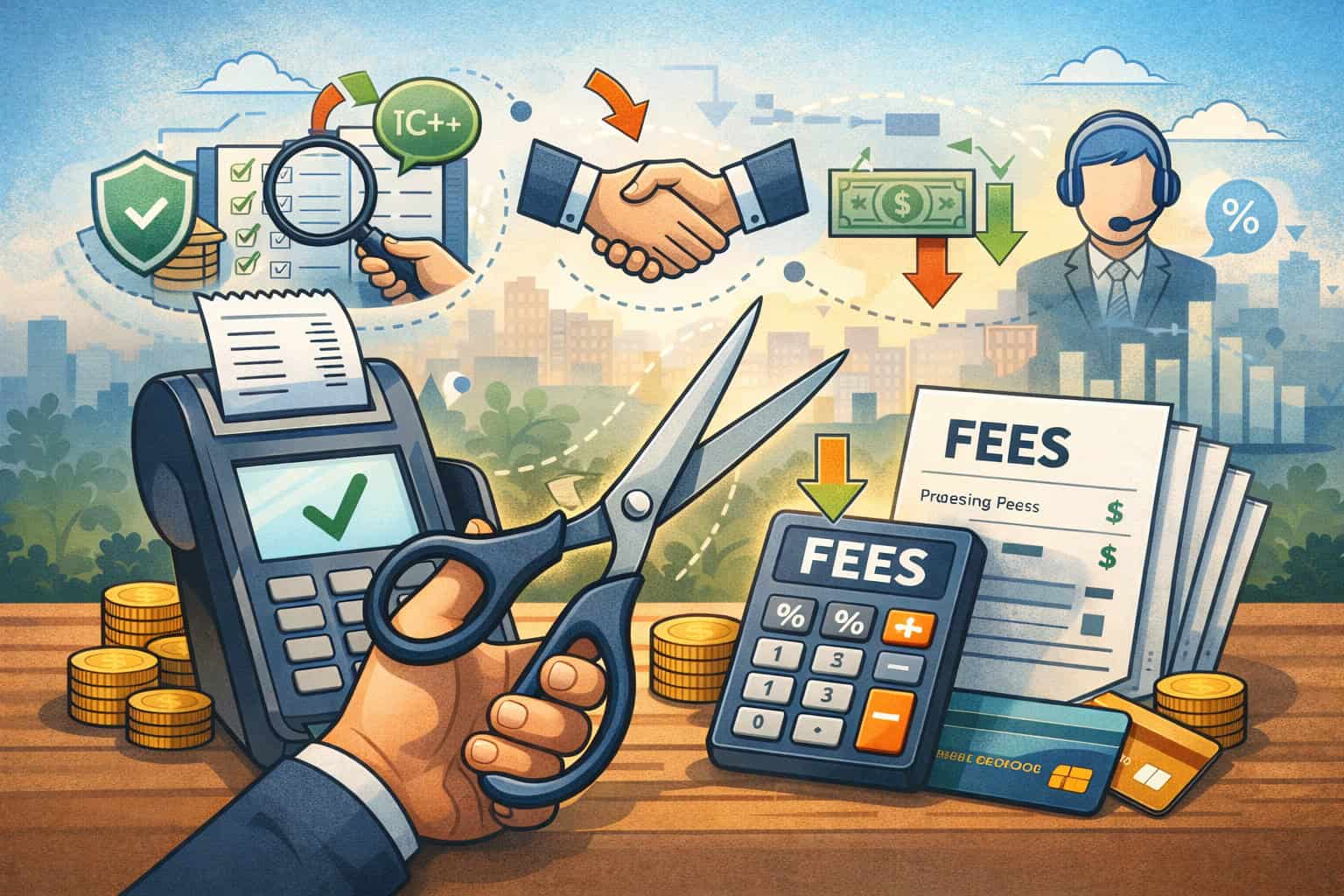
Reducing payment processing costs is one of the fastest ways to improve margins without raising prices or cutting staff. But most businesses attack the problem the wrong way: they focus only on the “rate,” not the drivers behind the rate.
In reality, payment processing costs are shaped by card type (debit vs. credit, rewards, commercial), how the transaction is run (chip, tap, keyed, online), security and compliance posture, fraud controls, your pricing model with the processor, and how clean your payment data is.
This guide breaks down payment processing costs in a practical way, shows you the levers you can control, and explains how to negotiate and optimize without risking chargebacks, compliance gaps, or customer frustration.
You’ll also get future-facing predictions so you can keep payment processing costs low as networks, security rules, and real-time payment options evolve.
Understanding What You’re Really Paying For
When people talk about “processing fees,” they often mean a single percentage. But payment processing costs are usually a stack of multiple components: interchange (paid to the card issuer), network assessments (paid to card brands), and processor/acquirer markup (paid to your provider).
Visa itself clarifies an important point: merchants don’t directly pay “interchange reimbursement fees” to Visa; merchants pay a broader “merchant discount” to their financial institution, and that total includes multiple services and pass-through costs.
Why this matters: if you only negotiate the headline rate, you can still overpay due to hidden markups, junk fees, and poor qualification.
And if you optimize the wrong layer, you can reduce one fee while increasing another (for example, weakening fraud tools to save cost can increase chargebacks and raise long-term payment processing costs).
A good mental model is to split payment processing costs into:
- Unavoidable base costs (interchange + network assessments that vary by card and transaction method)
- Controllable optimization costs (how you accept payments, data quality, fraud, compliance)
- Negotiable provider costs (processor markup, monthly fees, gateway fees, statement fees, support fees)
Your goal is to lower payment processing costs by (1) shifting more transactions into lower-cost categories, (2) removing unnecessary provider fees, and (3) preventing loss events (chargebacks, fraud, PCI penalties) that silently inflate your effective rate.
The Biggest Drivers of Payment Processing Costs (And Which Ones You Can Control)

Not all transactions are priced the same. Payment processing costs rise and fall based on the “risk and reward” profile of the payment. Card-present, chip/tap payments generally cost less than keyed or online transactions because they carry lower fraud risk and stronger authentication signals.
Rewards and premium credit cards often carry higher interchange than basic cards, and commercial cards can be especially expensive.
Your controllable drivers usually include:
1) Transaction method and acceptance environment
If you accept payments by chip or tap whenever possible, you reduce downgrade risk and avoid certain higher-cost categories that can trigger when transactions are keyed without strong verification.
2) Data quality (Level 2 / Level 3 for B2B)
For some business-to-business and commercial card payments, adding the right data fields can reduce payment processing costs by improving qualification. Not every business benefits equally, but if you invoice other businesses or government entities, it can be a meaningful lever.
3) Fraud and chargebacks
Fraud doesn’t just cause losses; it also pushes your account into higher monitoring programs, higher reserves, and stricter controls—raising payment processing costs indirectly.
4) Compliance and security posture
Security standards are getting stricter. PCI DSS v4 has future-dated requirements that became mandatory on March 31, 2025, which can impact your compliance workload and vendor setup.
If you ignore this, you can pay more through non-compliance fees, forced scans, or limited provider options.
5) Your pricing model and your processor’s fee strategy
Two businesses with identical sales volume can have very different payment processing costs because of pricing structure (interchange-plus vs. tiered vs. flat), “extra” fees, and contract terms.
Choose the Right Pricing Model to Lower Payment Processing Costs
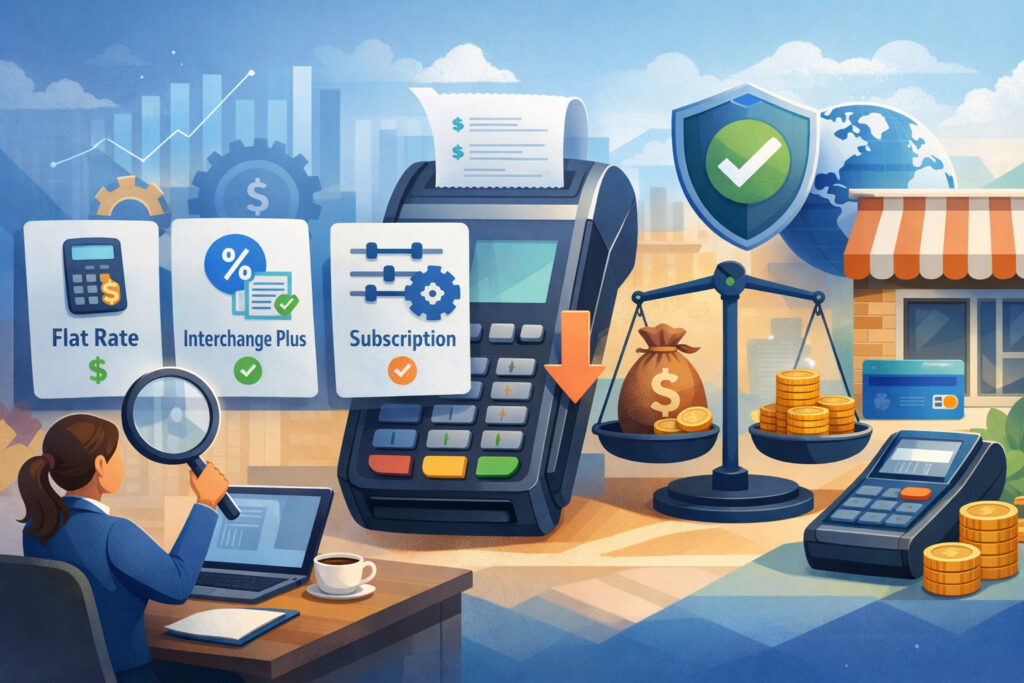
Pricing models are where many businesses leak money. If your agreement makes it hard to see what you’re paying, your payment processing costs will drift upward over time.
Interchange-plus (cost-plus)
This model passes interchange and network assessments through at cost, then adds a transparent markup (like “0.20% + $0.10”). When set up cleanly, interchange-plus often produces the best long-term outcome for businesses that want to actively manage payment processing costs because you can measure improvements.
- Best for: growing businesses, most retail and ecommerce merchants, companies that want transparency.
- Watch-outs: processors can still add monthly fees, gateway fees, and “non-qualified” style add-ons under different names—so audit the full statement.
Tiered pricing
Tiered plans bundle many interchange categories into “qualified / mid-qualified / non-qualified.” This is where payment processing costs often become unpredictable. Even if the advertised rate looks low, many real-world transactions fall into higher tiers, especially online, keyed, or rewards cards.
- Best for: very small merchants who need simplicity and won’t analyze statements.
- Watch-outs: downgrades, vague definitions, surprise effective rate increases.
Flat rate pricing
Flat rate can be okay for very small volume, but as you scale, you can overpay because the provider prices in risk and margin across a blended rate.
- Best for: very low volume, early-stage sellers, pop-ups.
- Watch-outs: expensive at scale; limited optimization impact on payment processing costs.
If you care about reducing payment processing costs month after month, you usually want interchange-plus with strong reporting, and a processor willing to remove unnecessary fees.
Audit Your Statement Like a Pro (So You Can Actually Reduce Payment Processing Costs)

You can’t reduce payment processing costs if you don’t know what’s driving them. A proper audit doesn’t require fancy software—just disciplined categories.
Start by calculating your effective rate:
- Total processing fees (all fees, not just discount rate) ÷ total card volume
Then break fees into:
- Per-transaction costs (authorization, capture, batch, gateway)
- Monthly fixed costs (PCI, statement, platform, support, terminal fees)
- Pass-through assessments (network fees)
- Processor markup (your negotiable part)
Red flags that inflate payment processing costs:
- Multiple “regulatory,” “security,” “program,” or “non-compliance” fees with vague descriptions
- “Non-qualified” or “downgrade” fees (even if you’re not on tiered pricing, these can show up)
- Duplicate gateway + “platform” fees for the same function
- Equipment leases (almost always expensive compared to purchasing)
Once you see your fee stack clearly, you can reduce payment processing costs by prioritizing the highest-dollar categories first. For many businesses, the biggest savings come from removing unnecessary monthly fees and cleaning up transaction qualification (how payments are run and validated), not from haggling over a few basis points.
Reduce Payment Processing Costs by Optimizing Card-Present Acceptance

If you operate a storefront, the fastest path to lower payment processing costs is often improving how payments are captured.
Use chip and tap as the default
Encourage customers to insert or tap rather than swipe. Modern card networks and fraud liability rules generally favor EMV methods. This reduces fraud exposure and helps you avoid behaviors that can trigger more expensive pricing outcomes.
Avoid manual key-entry unless necessary
Keyed transactions are higher risk. If you must key, use address verification (AVS), CVV, and clear receipts. Manual entry tends to raise payment processing costs indirectly through higher fraud rates and chargeback exposure.
Keep terminal software updated
Outdated terminal apps can cause routing quirks, failed tokenization, or missing data fields that lead to downgrades. Regular updates protect both security and your payment processing costs.
Train staff to prevent avoidable mistakes
Simple habits lower payment processing costs: correct transaction type selection, fewer re-rings, fewer partial approvals mishandled, fewer offline transactions, fewer forced transactions. A few minutes of training can produce savings that beat any rate negotiation.
When card-present flows are clean, your statement gets simpler, your chargebacks fall, and your long-term payment processing costs become more stable.
Reduce Payment Processing Costs for Online and Keyed Payments
Online and keyed payments can be profitable, but they tend to raise payment processing costs because of fraud risk and higher interchange categories. The goal isn’t to avoid online payments—it’s to make them “high quality” transactions.
Improve authorization quality
- Use AVS and CVV whenever available
- Implement 3-D Secure (3DS) when it makes sense for your risk profile
- Reduce retries and “test” transactions that can trigger fraud flags
Use tokenization and stored credentials correctly
Tokenization reduces risk and supports safer recurring billing. But stored credential rules matter—if recurring payments are labeled incorrectly, you can see higher payment processing costs or more declines.
Reduce chargebacks with better customer communication
A large portion of chargebacks are “friendly fraud” or confusion. Add:
- Clear billing descriptors
- Fast shipping updates
- Easy refunds (when appropriate)
- Responsive support
Chargebacks are one of the sneakiest amplifiers of payment processing costs because they create direct fees and indirect penalties (higher risk classification, reserves, account monitoring).
Leverage Debit, PIN, and Alternative Rails to Lower Payment Processing Costs
One strategic way to reduce payment processing costs is to shift payment mix toward lower-cost methods—without harming conversion.
Encourage debit where appropriate
Debit can be cheaper than credit depending on your business type, average ticket, and transaction routing. In many environments, PIN debit can reduce payment processing costs further, though customer experience matters.
Offer bank-based options for high-ticket or recurring
Bank transfers, account-to-account payments, and modern real-time rails can reduce payment processing costs for certain use cases—especially invoices, rent-like payments, services with repeat customers, and B2B.
Use Surcharging or Cash Discounting Carefully (And Legally)
Surcharging and cash discounting can offset payment processing costs, but they are heavily rule-driven and vary by state and card brand requirements.
Visa’s merchant surcharging guidance explains that surcharges are generally allowed in most states, but are subject to limitations and conditions. Mastercard also publishes surcharge rules and notes a maximum surcharge cap of 4% (with additional requirements and limitations).
Important practical points:
- You must disclose the surcharge clearly before the customer pays and show it on the receipt.
- Many rules limit the surcharge to the actual cost of acceptance or a cap, whichever is lower (and rules can differ across brands and states).
- Surcharging typically applies to credit, not debit, in many setups.
- Implementation mistakes can create compliance issues and brand disputes—raising payment processing costs through fees or account problems.
Cash discounting is a different model: you post a “cash price” and add a service fee for card use, structured to comply with applicable rules. Business groups have published practical guidance on surcharges and cash discount laws, emphasizing that these programs need careful setup.
If done right, these strategies can materially reduce payment processing costs. If done wrong, they can damage conversion, trigger complaints, or create rule violations. Treat it as a compliance project, not a quick hack.
Negotiate Processor Markup and Contracts to Reduce Payment Processing Costs
Negotiation is not just “lower my rate.” To reduce payment processing costs, negotiate the entire fee schedule and terms.
Focus your negotiation on:
- Markup (the processor’s percentage and per-transaction fee)
- Monthly minimums (remove them if possible)
- Gateway and platform fees (ensure you’re not paying twice)
- PCI fees (clarify what’s included and what triggers non-compliance fees)
- Equipment costs (avoid long leases)
- Early termination fees (reduce or eliminate)
- Batch/settlement fees (sometimes negotiable, sometimes removable)
Demand pricing clarity
Even if you choose interchange-plus, insist on:
- A complete fee schedule in writing
- A statement sample
- Clear definitions of pass-through vs. markup
If a provider won’t show you fees clearly, it’s hard to reduce payment processing costs long-term because you won’t know whether optimization efforts are working.
Lower Payment Processing Costs with Better PCI and Security Strategy
Security isn’t just about avoiding breaches—it affects payment processing costs through compliance fees, vendor requirements, and your ability to negotiate.
PCI DSS v4 includes future-dated requirements that became mandatory on March 31, 2025, and the PCI Security Standards Council has emphasized that organizations should adopt these requirements.
Practical steps to reduce payment processing costs via security:
- Use validated, modern payment solutions that reduce your PCI scope (tokenization, hosted fields, P2PE where appropriate).
- Minimize where card data touches your systems. Less scope = less audit burden and fewer compliance-related surprises.
- Track compliance deadlines and responsibilities with your vendors (gateway, POS, ecommerce platform).
Reduce Payment Processing Costs with Smart POS and Gateway Decisions
Your POS or gateway can silently increase payment processing costs with:
- Forced routing choices
- Limited tokenization options
- Expensive add-on modules
- Extra per-transaction gateway fees
- Poor reporting that hides root causes
To keep payment processing costs low:
- Choose tech that supports modern acceptance (tap, digital wallets, tokenization, stored credentials, fraud tools).
- Prefer systems that let you manage tips, partial approvals, and refunds cleanly—messy operations increase disputes.
- Ensure your gateway is priced reasonably and isn’t charging per “feature” you don’t use.
A common savings move: consolidate vendors. If you pay one company for POS, another for gateway, and another for reporting, you may be triple-paying for overlapping capabilities. The right stack reduces payment processing costs while improving operational simplicity.
Prevent Chargebacks and Fraud to Protect Your Effective Rate
Even if your stated fee is low, chargebacks can make your real payment processing costs skyrocket. You pay:
- Chargeback fees
- Lost revenue and product
- Support time
- Higher risk pricing or reserves if ratios rise
To reduce payment processing costs, build a “prevention system”:
- Accurate descriptors and receipts
- Clear refund and cancellation policies
- Proof of delivery / service documentation
- Proactive customer support and fast resolution
- Fraud screening tuned to your business (don’t block good customers unnecessarily)
Use B2B Optimization (Level 2 / Level 3) When It Fits Your Business
If you sell to other businesses, especially via invoices, you may be able to reduce payment processing costs by capturing additional transaction data (often called Level 2 or Level 3 data). This can improve qualification on certain commercial card categories.
This isn’t universal:
- Some merchants won’t see meaningful savings
- Some software stacks don’t support it cleanly
- Some customers won’t provide the necessary tax or line-item data
But for the right merchant profile, it can be a real lever to reduce payment processing costs without changing customer behavior—because customers still pay by card, you just process the transaction in a more optimized way.
Keep Up With Network and Interchange Changes (So Your Costs Don’t Drift Up)
Card networks update programs and rates periodically. Mastercard publishes region-specific interchange programs and rates, including detailed criteria for certain merchant tiers and volumes. Mastercard also provides educational material explaining how interchange is determined and updated.
What you can do to protect payment processing costs:
- Review statements monthly for sudden category shifts
- Monitor card mix changes (more rewards cards, more keyed transactions, more online volume)
- Ask your processor for downgrade/qualification reporting
- Ensure your MCC (merchant category code) is correct; incorrect MCC can raise payment processing costs
Build a 30-Day Action Plan to Reduce Payment Processing Costs
If you want results quickly, follow this sequence:
Week 1: Get visibility
- Calculate effective rate
- List every monthly fee
- Identify top 3 fee categories by dollars
Week 2: Fix acceptance and data quality
- Train staff on chip/tap, keyed rules, refunds
- Improve online checkout verification settings
- Reduce transaction errors that create downgrades
Week 3: Negotiate and remove junk fees
- Ask for interchange-plus (if appropriate)
- Negotiate markup and remove unnecessary fees
- Eliminate equipment leases and redundant services
Week 4: Lock in security and dispute prevention
- Confirm PCI approach aligned to PCI DSS v4 requirements
- Tighten chargeback response process
- Improve customer-facing policies and communication
This approach reduces payment processing costs sustainably because it attacks root causes, not just the “rate.”
FAQs
Q.1: What is the fastest way to reduce payment processing costs?
Answer: The fastest wins usually come from removing unnecessary monthly fees and fixing transaction quality issues (keyed vs. chip/tap, missing data, downgrades). Many businesses can reduce payment processing costs without changing providers by auditing fees and eliminating add-ons that don’t deliver value.
Q.2: Should I switch to interchange-plus pricing?
Answer: Interchange-plus often helps reduce payment processing costs because it is transparent and makes optimization measurable. But you still need a clean fee schedule and a provider that won’t stack hidden monthly charges.
Q.3: Will surcharging always reduce payment processing costs?
Answer: Surcharging can offset payment processing costs, but it must be implemented according to card brand rules and state requirements.
Visa and Mastercard publish surcharge guidance and caps, and you must meet disclosure and compliance conditions. Poor implementation can hurt sales or create compliance problems that increase payment processing costs.
Q.4: Why did my payment processing costs go up even though my “rate” didn’t change?
Answer: Common reasons include a shift in card mix (more rewards or commercial cards), more keyed/online transactions, more chargebacks, new gateway/platform fees, or network/interchange program updates. Monitoring effective rate and category trends helps you catch these changes early.
Q.5: Do PCI requirements affect payment processing costs?
Answer: Yes. Non-compliance fees, remediation, and restricted processing options can raise payment processing costs. PCI DSS v4 has requirements that became mandatory on March 31, 2025, so maintaining a low-scope, tokenized setup can protect both security and cost.
Q.6: What payment method usually has the lowest processing cost?
Answer: It depends on the business and setup, but bank-based methods and certain debit routing options can reduce payment processing costs for some use cases. Cards remain essential for conversion, so the best strategy is often offering multiple options and steering the right customers to the right rails.
Conclusion
Reducing payment processing costs is not a single negotiation—it’s an operating system. You lower payment processing costs by combining transparency (clean statements), smarter acceptance (chip/tap and verified ecommerce), fewer disputes, tighter security, and a fair contract.
The businesses that win over the next few years will treat payments as a profit lever: they’ll diversify payment methods, adopt modern tokenization and compliance strategies as standards evolve (including PCI DSS v4 requirements effective March 31, 2025), and stay alert to network rule changes and market shifts.
Leave a Reply