By Joseph Bryson June 2, 2026
Getting approved for a merchant account can feel complicated when you are not sure what underwriters are looking for. One provider may ask for a few basic details, while another may request bank statements, processing history, website updates, licenses, financial statements, or additional explanations about your products and services.
That variation is normal because merchant account approval requirements depend on your business type, transaction method, expected volume, ownership structure, industry risk, and chargeback exposure.
A merchant account is not the same as a regular business bank account. It is part of the payment acceptance system that allows a business to accept debit cards, credit cards, and other electronic payments.
When a customer pays by card, funds move through several parties before they reach your settlement account. The payment processor, acquiring bank, card network, issuing bank, and merchant services provider all have roles in authorizing, clearing, settling, and monitoring transactions.
Because card payments involve fraud risk, refund risk, chargeback risk, compliance obligations, and possible financial losses, providers review a business before approving it. This review is called merchant account underwriting.
It helps confirm that the business is legitimate, the owner is identifiable, the bank account belongs to the business, the products or services are clearly described, and the expected processing activity makes sense.
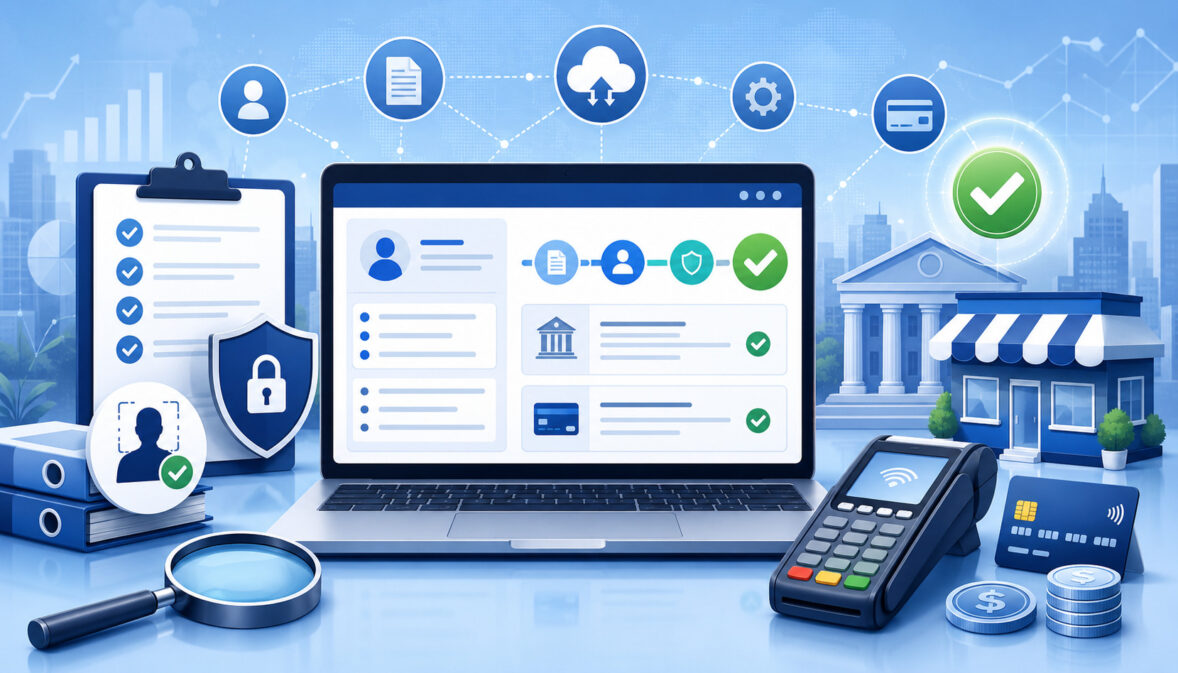
This guide explains merchant account approval requirements from a practical business owner’s perspective. It covers what documents are commonly needed, how underwriters evaluate an application, why ecommerce websites are reviewed, what can affect approval, how high-risk merchant account requirements differ, and how to prepare before submitting a merchant processing application.
This article is for general educational purposes. Merchant services approval requirements can vary by provider, acquiring bank, business profile, risk category, transaction method, and underwriting policy.
What Merchant Account Approval Requirements Mean
Merchant account approval requirements are the information, documents, and business conditions a payment processor or merchant services provider reviews before allowing a business to process card payments.
These requirements help determine merchant account eligibility, account terms, processing limits, funding timing, reserve requirements, and ongoing monitoring expectations.
For a low-risk retail business with a clear storefront, modest monthly processing volume, and straightforward products, the merchant account application requirements may be fairly simple.
The business may need to provide legal business details, owner information, a tax ID, a business bank account, and basic operational information. In-person businesses often have lower fraud exposure than card-not-present businesses because the customer and payment card are usually present at checkout.
For ecommerce sellers, startups, contractors, professional service providers, subscription companies, travel-related businesses, digital product sellers, and other more complex models, the approval process can be more detailed.
Underwriters may review the website, checkout flow, refund policy, privacy policy, terms and conditions, fulfillment process, billing practices, average ticket size, chargeback history, and customer support channels.
The main goal is not to make approval difficult. The goal is to understand risk before transactions begin. A merchant account creates financial exposure for the acquiring bank and payment processor.
If a merchant accepts payments, receives deposits, and later generates refunds, fraud claims, or chargebacks that exceed available funds, the processor or acquiring bank may be responsible for those losses.
Merchant account approval also helps protect the payment ecosystem. Underwriters screen for prohibited business types, misleading sales practices, identity concerns, potential money laundering risk, excessive chargeback exposure, and businesses that may create reputational or regulatory problems.
Official payment security standards, including PCI DSS, are designed to protect payment account data across the payment lifecycle, and providers often consider security practices during onboarding and ongoing reviews. See the PCI Security Standards Council’s PCI DSS overview for more background on payment data security.
In practical terms, merchant account approval requirements answer several questions:
- Is the business real, registered, and operating as described?
- Is the applicant authorized to open the account?
- Can the owner’s identity be verified?
- Are the products or services allowed by the provider and acquiring bank?
- How much will the business process each month?
- What is the average ticket size?
- Are payments accepted in person, online, by invoice, by phone, or through recurring billing?
- Does the business have a history of excessive refunds or chargebacks?
- Does the website clearly explain pricing, delivery, refunds, privacy, and contact options?
- Does the business have enough financial stability to handle disputes and refunds?
Why Merchant Account Approval Requirements Exist
Merchant account approval requirements exist because payment processing involves more than moving money from a customer to a business. Every card transaction carries some level of financial and compliance risk.
Underwriting helps payment processors, acquiring banks, and merchant services providers decide whether that risk is acceptable and what controls should apply.
When a customer pays by card, the merchant may receive funds before the risk period has fully passed. Customers can dispute transactions after purchase for reasons such as fraud, non-delivery, duplicate billing, product dissatisfaction, unclear cancellation terms, or unrecognized billing descriptors.
If the merchant cannot cover refunds or chargebacks, the processor or acquiring bank may be exposed.
That is why merchant account underwriting looks at both the business and the transaction environment. A contractor billing deposits for large projects creates different risk than a café processing small in-person purchases.
A professional services firm billing retainers creates different risk than an ecommerce store shipping high-ticket goods. A subscription business creates different risk than a one-time purchase business because recurring billing often leads to cancellation disputes when customers misunderstand or forget the terms.
Underwriting also supports compliance obligations. Providers commonly perform business verification, owner identity verification, Know Your Customer checks, anti-money laundering screening, and prohibited business reviews.
They may need to understand beneficial ownership, business registration, tax ID details, bank account ownership, and whether the applicant appears on restricted lists. These checks are part of responsible payment processor approval and help prevent misuse of the payments system.
The Federal Trade Commission’s business guidance on payments and billing also highlights the importance of authorized charges and consumer protection in billing practices. This matters because unclear billing, hard-to-cancel subscriptions, or misleading sales practices can increase complaints and chargebacks.
Merchant account approval requirements also help providers set appropriate terms. A business with stable processing history and low chargebacks may qualify for standard settlement and higher volume limits. A newer business, high-ticket seller, or higher-risk merchant may be approved with conditions such as:
- Lower initial processing limits
- Longer funding timeline
- Rolling reserve
- Funding hold for unusual activity
- Additional fraud controls
- Periodic financial reviews
- More detailed website or policy requirements
These conditions are not always a sign that something is wrong. They are often risk management tools. For example, a rolling reserve may be used when a business has long delivery timelines, high refund exposure, or limited processing history.
A temporary funding hold may occur when transaction volume suddenly exceeds the approved monthly processing volume or average ticket size.
Business owners sometimes assume merchant services underwriting happens only once. In reality, approval is the beginning of an ongoing relationship. Providers may continue monitoring chargeback ratio, refund patterns, transaction volume, fraud alerts, processing spikes, business model changes, and compliance issues after approval.
A business that is approved for one sales model may need additional review if it later adds subscriptions, launches a new product category, changes ownership, or begins processing much higher ticket sizes.
Basic Merchant Account Requirements for Most Businesses

Most merchant account requirements begin with the same foundation: proof that the business exists, proof that the applicant is authorized, and proof that funds can be settled into a valid business bank account.
These basics apply to many business types, including retailers, ecommerce stores, contractors, service providers, startups, healthcare-related offices, consultants, repair businesses, and professional firms.
The exact merchant account documents may differ, but most providers want enough information to verify the business, understand ownership, assess transaction risk, and confirm settlement details.
If the business is newer, underwriters may focus more on the owner’s background, website quality, projected volume, and operational readiness. If the business is established, underwriters may also review processing history, bank statements, and financial patterns.
A standard merchant account application often asks for:
- Legal business name and DBA name
- Business address and contact details
- Tax ID or employer identification number
- Business structure, such as LLC, corporation, partnership, or sole proprietorship
- Owner names, ownership percentages, and personal details for identity verification
- Business bank account information
- Products or services sold
- Sales channels, such as in-person, ecommerce, invoices, mobile, recurring, or keyed payments
- Monthly processing volume
- Average ticket size and highest expected ticket size
- Refund policy and delivery method
- Prior processing history, if available
The provider may also ask whether the business accepts card-not-present transactions. Card-not-present payments include ecommerce checkout, phone orders, keyed transactions, payment links, invoices, and recurring billing.
These transaction types often receive more scrutiny because the physical card and cardholder are not present, which can increase fraud and dispute risk.
For businesses preparing their setup, the merchant services setup checklist for businesses explains how sales channels, refund practices, fraud controls, settlement expectations, and compliance planning all connect to a stronger payment acceptance environment.
Business Registration Details
Business registration details help underwriters confirm that the company is legally formed and operating under the name shown on the merchant account application. This may include articles of organization, articles of incorporation, a certificate of formation, a fictitious name filing, or other state-issued registration records.
A mismatch between the application, bank account, website, invoices, and registration documents can delay merchant account approval.
For example, if the legal entity is “ABC Holdings LLC,” but the website only shows “ABC Wellness,” the underwriter may ask for proof that the DBA belongs to the legal entity. If the owner uses a home address, coworking address, virtual office, or multiple locations, the provider may request clarification.
Underwriters are not only checking paperwork. They are confirming that customers can identify the business and that the merchant can be contacted if there is a problem. A business that uses multiple brand names, separate websites, or different billing descriptors should be ready to explain how everything connects.
Tax ID and Business Bank Account
A tax ID helps verify the legal identity of the business. Many registered entities use an employer identification number, while some sole proprietors may use owner-based tax information depending on the provider’s policy. The tax ID should match the legal business name as closely as possible.
A business bank account is usually required because the processor needs a settlement account where card deposits can be sent and where fees, refunds, or chargebacks can be debited. A personal account may not be acceptable for many business structures. Providers generally want to confirm that the account belongs to the applicant business or authorized owner.
Bank verification may involve a voided check, bank letter, recent bank statement, or electronic verification. The underwriter wants to confirm routing details, account ownership, and account status. If the bank account name does not match the business name, approval may be delayed until the relationship is documented.
A separate business bank account also helps with reconciliation. When card deposits, refunds, chargebacks, and fees are mixed with personal activity, bookkeeping becomes harder and financial reviews become less clear. Clean banking records can support future requests for higher processing limits or better account terms.
Owner Identity Verification
Owner identity verification is a core part of merchant account verification. Providers usually need to identify individuals who own or control the business. This may include majority owners, managing members, officers, partners, or other beneficial owners depending on the ownership structure and underwriting policy.
Identity verification may involve a government-issued ID, date of birth, home address, ownership percentage, tax identification details, and sometimes additional documentation. The goal is to confirm that the applicant is a real person, is authorized to represent the business, and does not create unacceptable fraud or compliance risk.
This review may feel personal, but it is standard in financial services. Payment processors and acquiring banks need to know who is behind the account because the merchant account can create financial liability. If the business closes, disputes increase, or refunds cannot be covered, the provider must understand who is responsible.
Businesses with complex ownership structures should prepare an ownership chart. This is especially helpful for companies with parent entities, multiple members, investors, trusts, or holding companies. The clearer the ownership trail, the easier it is for underwriters to complete Know Your Customer and business verification checks.
Documents Needed for a Merchant Account Application

Merchant account application requirements often depend on the type of business, but most applicants should be ready to provide a core set of documents. Having these documents prepared before applying can make the merchant account approval process smoother and reduce back-and-forth with underwriting.
Some providers use automated checks for low-risk accounts, while others require manual document review. High-volume merchants, high-risk businesses, new ecommerce brands, card-not-present sellers, and businesses with unusual transaction patterns may need to submit more detailed information.
If anything in the application is unclear, underwriters may ask for supporting documents even if the provider did not request them at the beginning.
The purpose of documentation is to support the story told in the application. If you say your business sells custom furniture online, the website, invoices, bank deposits, supplier records, shipping process, and refund policy should all support that statement.
If you say your average ticket is modest, but bank statements show large deposits or your website sells high-ticket packages, the provider may ask for clarification.
Below is a practical checklist businesses can use before submitting a merchant processing application.
| Requirement | Why It Matters | Who Usually Needs It | Tips to Prepare |
| Business registration documents | Confirms legal formation and business name | Registered entities, DBAs, multi-owner businesses | Match the legal name across application, bank account, and website |
| Tax ID confirmation | Supports business verification and tax reporting | Most registered businesses | Use the exact legal name tied to the tax ID |
| Business bank account proof | Confirms settlement account ownership | Nearly all applicants | Provide a voided check, bank letter, or statement if requested |
| Owner government ID | Supports owner identity verification | Owners, officers, managing members | Make sure the ID is current and readable |
| Business license or professional license | Confirms authority to operate in regulated fields | Contractors, healthcare, legal, financial, specialty services | Provide active license details and renewal status if applicable |
| Recent bank statements | Helps assess financial stability and cash flow | Established businesses, higher-risk merchants, higher-volume applicants | Keep statements complete and unedited |
| Processing statements | Shows prior payment processing volume and chargebacks | Businesses that have processed cards before | Provide several recent months when available |
| Website URL and policy pages | Supports ecommerce and card-not-present review | Ecommerce, subscriptions, online services | Publish refund, privacy, terms, shipping, and contact pages |
| Product or service description | Helps assign risk category and MCC | All businesses | Be specific about what is sold and how it is delivered |
| Financial statements | Helps assess larger or more complex businesses | High-volume, high-ticket, or higher-risk applicants | Provide profit and loss, balance sheet, or CPA-prepared statements if requested |
| Supplier invoices or fulfillment proof | Supports inventory and delivery claims | Ecommerce, high-ticket, imported goods, dropshipping | Show that products can be fulfilled as advertised |
| Chargeback history | Helps assess dispute risk | Businesses with prior processing | Include ratios, dispute counts, and steps taken to reduce disputes |
Business License or Professional License
Some businesses need a business license, professional license, permit, or registration to operate legally. Underwriters may request proof when the business is in a regulated or licensed field.
This can include contractors, medical offices, legal services, financial services, transportation providers, childcare services, specialized consulting, regulated retail, and other professional categories.
A license helps confirm that the business is allowed to provide the services it advertises. For example, a contractor may need a contractor license, a healthcare-related provider may need professional credentials, and a specialty retailer may need permits tied to its product category.
If the business operates in multiple jurisdictions, underwriters may ask which locations are covered.
License issues can delay merchant account approval if the business advertises services that require credentials but cannot provide proof. The provider may also review whether the legal entity name, DBA, owner name, and license holder match. If the license is held by an individual but the merchant account is under a business entity, be ready to explain the relationship.
Bank Statements and Financial Documents
Bank statements help underwriters understand cash flow, deposit patterns, account stability, and whether the business appears active. They may also help confirm that the business can handle refunds, seasonal changes, chargebacks, and operating expenses.
For newer businesses, bank statements may be limited or unavailable. In that case, a provider may focus on startup documentation, owner background, business plan, website readiness, expected transaction volume, supplier invoices, contracts, or proof of early sales.
For established businesses, recent statements can support higher processing limits or more favorable approval terms.
Financial statements may be requested for larger merchants, high-ticket sellers, businesses with delayed fulfillment, or companies seeking significant monthly processing volume. Underwriters may review revenue, liabilities, reserves, cash balance, and operating stability.
Do not alter statements or remove pages. If something in a statement needs explanation, provide a note. Underwriters are used to seeing normal business fluctuations, but incomplete or edited documents can create trust concerns.
Processing History
Processing history is one of the most useful documents for payment processing approval. Prior merchant statements show actual monthly processing volume, average ticket size, refund activity, chargeback counts, card mix, and processing trends.
A strong history can support merchant services approval because it gives underwriters real performance data instead of estimates.
If your business has processed cards before, provide several months of statements if requested. These statements may show:
- Total card sales
- Number of transactions
- Average ticket size
- Refund volume
- Chargeback count
- Chargeback ratio
- Keyed, swiped, dipped, tapped, or online transaction mix
- Fees and settlement activity
A history with low chargebacks, stable volume, and consistent deposits can be a positive factor. A history with excessive disputes, frequent refunds, large spikes, terminated accounts, or unexplained volume changes may require additional review.
New businesses do not have processing history, which is not automatically a problem. The key is to provide realistic projections and enough operational detail for the underwriter to understand how sales will occur.
Business and Ownership Information Underwriters Review

Merchant services underwriting is not limited to documents. Underwriters evaluate the full business profile to understand legitimacy, risk, and operational readiness. The merchant account approval process usually includes both automated checks and human review, especially when the business model is complex or the risk category is higher.
Underwriters may compare the application against public records, business registration databases, tax records, bank verification results, website content, marketing claims, owner identity information, and prior processing history. They may also screen the business and owners against internal and external risk databases.
This review helps answer whether the business is who it says it is, whether it sells what it says it sells, and whether customers are likely to understand the purchase.
Many disputes begin when customers do not recognize a charge, misunderstand delivery timelines, cannot reach support, or believe refund terms were unclear. That is why underwriters care about more than financial numbers.
A business with clear ownership, consistent branding, accurate contact details, transparent pricing, and documented policies usually creates fewer questions. A business with vague products, aggressive marketing claims, hidden ownership, mismatched addresses, or unclear customer terms may receive more scrutiny.
For businesses comparing payment setups, the guide on what a merchant account is and why businesses use one provides helpful context on how merchant accounts fit into the broader payment acceptance process.
Business Model and Sales Channels
The business model tells underwriters how money is earned and what risks may appear after the sale. A business that sells physical goods in a storefront is different from a business that sells coaching packages online.
A contractor billing deposits is different from a restaurant taking in-person payments. A software company with subscriptions is different from a repair business charging after service completion.
Underwriters will usually want to know:
- What is sold?
- Who buys it?
- How is the price determined?
- When does the customer pay?
- When is the product delivered or service completed?
- Are payments one-time, installment-based, recurring, or deposit-based?
- Are products shipped, downloaded, picked up, or delivered in person?
- Are sales made through a website, POS system, invoice, payment gateway, phone order, or mobile reader?
Businesses that accept card-not-present transactions may need stronger fraud controls because the cardholder is not physically present.
Ecommerce sellers may need address verification, CVV checks, order review rules, shipping documentation, and clear customer communication. Service businesses may need signed agreements, project milestones, completion records, or authorization forms.
Ownership Structure and Control
Ownership structure matters because payment processors need to know who controls the merchant account. A simple single-member LLC is usually easier to verify than a company with several owners, parent entities, investors, or affiliated brands. Complex structures are not necessarily a problem, but they require clearer documentation.
Underwriters may ask for details about individuals with significant ownership or control. They may also request operating agreements, ownership charts, corporate resolutions, or documentation showing who is authorized to sign the merchant account application.
If the business recently changed ownership, merged, rebranded, or moved to a new legal entity, be prepared to explain the transition. Prior processing history from the old entity may not automatically apply to the new one unless ownership and operations are clearly connected.
Business Verification and Contactability
Business verification includes checking whether customers, processors, and banks can identify and contact the business. This may sound basic, but it is a major part of risk review. If a customer cannot reach a merchant, the chance of a dispute increases.
Underwriters may look for:
- Working phone number
- Business email address
- Physical or mailing address
- Website contact page
- Customer support hours
- Clear business name on receipts and checkout pages
- Billing descriptor that customers will recognize
A billing descriptor is the name that appears on a customer’s card statement. If the descriptor is confusing or unrelated to the brand the customer purchased from, disputes can increase. For example, a customer who buys from “Northside Home Repair” may not recognize a statement entry from “NSH Holdings LLC.”
Contactability is also important after approval. If fraud alerts, chargebacks, compliance notices, or account questions come in, the provider needs to reach someone quickly. Businesses should keep processor contact information current and monitor email addresses used for account notices.
Financial History and Processing Volume Requirements
Financial history and processing volume requirements help underwriters determine whether the requested account limits match the business’s actual capacity and risk profile. This does not mean every business needs years of financial records.
It means the provider wants a reasonable picture of expected payment activity and the business’s ability to handle refunds, disputes, and operating obligations.
Two numbers receive close attention: monthly processing volume and average ticket size. Monthly processing volume is the total amount the business expects to process in card payments each month.
Average ticket size is the typical transaction amount. Underwriters may also ask for the highest expected ticket size because a few large transactions can create more exposure than many small transactions.
For example, a business processing small retail transactions has different risk than a contractor processing large deposits. Even if both businesses process the same monthly volume, the high-ticket business may create more refund and chargeback exposure because each dispute is larger.
A processor may approve a merchant account with limits tied to the application. If the business later exceeds those limits without notice, it may trigger a review or funding hold. This is why realistic projections matter. Understating volume to appear lower risk can create problems later. Overstating volume without support can also cause questions.
Monthly Processing Volume
Monthly processing volume is one of the most important merchant account approval requirements because it helps the provider estimate exposure. A business asking to process a modest amount may be reviewed differently from a business expecting large monthly card sales.
Underwriters may compare projected volume to business age, bank deposits, website traffic, inventory, contracts, prior processing statements, and industry norms. If the requested volume seems too high for the available evidence, the provider may approve a lower starting limit or ask for more documentation.
Seasonal businesses should explain their expected peaks. For example, a retailer may process more during holiday periods, while a contractor may process more during warm-weather months. If seasonality is not explained, normal spikes can look suspicious.
Average Ticket Size
Average ticket size helps underwriters understand the typical transaction. A business with a $25 average ticket and a business with a $2,500 average ticket may require different controls even if both are legitimate. Higher ticket sizes increase financial exposure because one dispute can represent a larger loss.
Underwriters may also compare average ticket size to the products or services listed. If an application says the business sells low-cost accessories but the requested average ticket is very high, the provider may ask questions. If a professional service provider bills large retainers, the underwriter may ask for service agreements, refund terms, or proof of completed work.
The highest ticket size is also important. A business with a $100 average ticket but occasional $10,000 invoices should disclose that. Sudden large transactions can trigger risk alerts if they were not anticipated during underwriting.
Chargeback History
Chargeback history is a key factor in credit card processing approval. A chargeback occurs when a cardholder disputes a transaction through their card issuer. Some chargebacks are legitimate fraud claims, while others stem from unclear billing, delivery problems, subscription confusion, customer dissatisfaction, or friendly fraud.
Underwriters may look at the chargeback ratio, dispute count, refund ratio, and how the business responds to disputes. A low chargeback ratio and strong documentation can support approval. A high chargeback ratio may lead to additional review, reserves, higher pricing, lower limits, or denial.
Chargebacks are not only financial events. They signal customer experience and risk management issues. If customers frequently dispute because they cannot recognize the billing descriptor, do not understand refund terms, or cannot contact support, the business may need operational improvements before approval.
Businesses can reduce chargeback risk by:
- Using clear billing descriptors
- Sending itemized receipts
- Publishing refund and cancellation policies
- Responding quickly to support requests
- Keeping delivery proof and service records
- Avoiding misleading claims
- Using fraud controls for online orders
- Confirming high-ticket transactions before fulfillment
Website and Ecommerce Approval Requirements
Website review is one of the most important parts of ecommerce merchant account approval requirements. If a business accepts online payments, the website often becomes the underwriter’s main window into the customer experience.
The site should clearly show what is sold, how pricing works, how orders are fulfilled, how customers can request help, and what happens if they want a refund or cancellation.
A website that looks incomplete, vague, misleading, or inconsistent with the application can delay approval. Underwriters may request updates before approving the account. For ecommerce sellers, website quality is not only about design. It is about trust, transparency, and dispute prevention.
The website should make it easy for a customer to understand:
- Business name
- Products or services sold
- Prices and fees
- Shipping or delivery timelines
- Refund and return policy
- Cancellation terms
- Privacy practices
- Terms and conditions
- Customer support contact information
- Checkout security
- Subscription terms, if applicable
If the business accepts payments online, the relationship between a payment gateway and merchant account also matters. A helpful overview of the difference between these tools is available in Payment Gateway vs Merchant Account: Differences Explained.
Website Checkout Requirements
An ecommerce checkout should be clear, secure, and consistent with the rest of the website. The products in the cart should match the product descriptions on the site, and the customer should see the total cost before submitting payment. Unexpected fees, vague product descriptions, unclear shipping costs, or hidden recurring terms can increase dispute risk.
Underwriters may review whether checkout pages use secure connections, whether the payment gateway is properly integrated, and whether customer information is handled appropriately.
PCI DSS provides security requirements designed to protect payment account data, and businesses that accept cards should understand their responsibilities based on how they collect, transmit, or store payment information.
Checkout should also support accurate authorization. For online payments, fraud controls may include address verification, CVV verification, velocity controls, device checks, risk scoring, order review queues, and step-up authentication for higher-risk transactions. The right controls depend on the business model and transaction volume.
A good ecommerce checkout answers customer questions before they become disputes. Customers should know what they are buying, when they will receive it, what name will appear on their statement, and how to contact support.
Refund and Return Policy
A refund and return policy is a major part of merchant services approval because it affects chargeback risk. Underwriters want to see that customers have a clear path to resolve problems without going directly to their card issuer.
The policy should explain:
- Whether refunds are offered
- How long customers have to request a return
- Whether items must be unused or unopened
- Who pays return shipping
- How long refunds take to process
- Whether digital products, custom work, deposits, or services are refundable
- How cancellations work for subscriptions or appointments
The policy should be easy to find from the website footer, product pages, checkout page, or receipts. A policy that is hidden, confusing, or overly restrictive can create risk. If the business does not offer refunds in certain situations, that should be disclosed before purchase.
For service providers, refund policies may be tied to milestones, deposits, labor already performed, or appointment cancellation windows. For contractors, professional service providers, and consultants, written agreements can support the refund policy and reduce misunderstandings.
Privacy Policy and Terms of Service
A privacy policy explains how customer information is collected, used, stored, and shared. Terms of service explain the rules of buying from or using the business’s services. These pages are especially important for ecommerce, subscriptions, digital products, online services, memberships, and businesses collecting customer data.
Underwriters may look for these pages because they show whether the business communicates key terms before accepting payment. Privacy and terms pages also support compliance review and customer trust. The content should match the actual business model. Copying generic terms that do not reflect how the business operates can create problems later.
Terms of service may cover payment authorization, account access, billing cycles, cancellations, intellectual property, service limitations, dispute resolution, and customer responsibilities. Subscription businesses should be especially careful to explain recurring charges, renewal timing, cancellation procedures, and trial conversions.
Risk Factors That Can Affect Merchant Account Approval
Merchant account approval is based on risk assessment. Risk does not always mean a business is bad or unsafe. It means the provider sees factors that could increase financial exposure, fraud risk, regulatory complexity, or chargeback likelihood. Understanding these factors helps business owners prepare stronger applications and avoid preventable delays.
Common risk factors include business type, transaction method, average ticket size, monthly processing volume, fulfillment timeline, chargeback history, refund ratio, product category, marketing practices, business age, financial strength, ownership history, and card-not-present exposure.
A new business may be considered higher risk because there is no operating history. A high-ticket business may be at higher risk because each dispute is costly.
A business with delayed delivery may be at higher risk because customers may dispute before fulfillment is complete. A recurring billing model may be higher risk because cancellations and billing misunderstandings can trigger disputes.
Some industries are also classified as higher risk due to historical chargeback rates, regulatory scrutiny, reputational concerns, or fraud exposure. The article What Is a High-Risk Merchant? Risk Categories Explained provides additional context on how risk categories can affect payment acceptance.
Risk factors may influence approval terms rather than causing denial. A provider may approve the account with a reserve, lower processing limits, additional documentation requirements, longer settlement timing, or mandatory fraud tools.
Card-Not-Present Transactions
Card-not-present transactions include ecommerce sales, phone orders, keyed payments, recurring billing, invoices, and payment links. These transactions often receive more scrutiny because the card and cardholder are not physically present at checkout. This can make fraud harder to detect and disputes harder to defend.
For card-not-present businesses, underwriters may review fraud controls, fulfillment evidence, customer authentication, website policies, billing descriptors, and transaction monitoring. They may ask how orders are reviewed, how suspicious purchases are handled, and what proof the business keeps after delivery or service completion.
This does not mean online businesses cannot get approved. It means they need to show that the customer experience is transparent and that fraud risk is managed. Strong checkout design, clear policies, reliable customer support, and documented fulfillment can all support approval.
Prohibited Business Types
Every provider and acquiring bank has policies about business types they will not support. Prohibited business types may vary, but they often include activities that create unacceptable legal, regulatory, reputational, or financial risk. Some businesses may be allowed by one provider but not another, depending on sponsor bank rules and risk appetite.
Applicants should be upfront about what they sell. Trying to hide restricted products, using vague descriptions, or processing for another business through your account can lead to denial, funding holds, or account termination. Underwriters compare application details, website content, transaction data, and sometimes marketing materials to confirm the business model.
If your business has multiple product lines, disclose them. If some products are restricted, clarify whether they will be processed through the account. Transparency is better than surprise discoveries during compliance review.
Sudden Volume or Ticket Changes
Even after approval, sudden changes can trigger review. If a business is approved for a certain monthly processing volume and average ticket size, then quickly processes much higher amounts, the provider may pause funding or request updated documentation.
This is especially common when a business launches a major promotion, adds a new product line, wins a large contract, shifts from in-person to online sales, or starts accepting deposits for future delivery. The processor may want to confirm that the change is legitimate and that the business can manage the added refund and chargeback exposure.
High-Risk Merchant Account Approval Requirements
High-risk merchant account requirements are usually more detailed than standard merchant account requirements. A business may be considered high risk because of its industry, transaction method, chargeback exposure, regulatory environment, average ticket size, sales model, fulfillment timeline, financial history, or prior processing issues.
High-risk does not mean untrustworthy. It means the provider sees a higher probability of disputes, fraud, refunds, compliance concerns, or financial loss. Many legitimate businesses operate in categories that require specialized underwriting.
Examples may include certain subscription models, travel-related services, high-ticket ecommerce, digital goods, coaching programs, specialized retail, extended delivery products, and businesses with elevated chargeback history.
High-risk merchant services underwriting may involve more documentation, longer review times, stricter policy review, reserve requirements, enhanced monitoring, and more specific account limits. The provider may also require stronger fraud prevention tools, clearer cancellation procedures, more detailed customer agreements, or proof of licensing.
Businesses in higher-risk categories should prepare for a more detailed review rather than assuming the same requirements as a low-risk retail store. The better the documentation, the easier it is for underwriters to understand and price the risk.
High-Risk Business Documentation
High-risk businesses may need to provide all standard merchant account documents plus additional support. The goal is to show that the business is legitimate, financially stable, transparent with customers, and capable of handling disputes.
Additional documentation may include:
- Several months of processing statements
- Several months of bank statements
- Financial statements
- Supplier invoices
- Fulfillment proof
- Customer contracts or service agreements
- Marketing materials
- Product compliance documentation
- Licenses or permits
- Chargeback mitigation plan
- Fraud prevention process
- Refund and cancellation procedures
- Customer support workflow
- Explanation of prior account termination, if applicable
A strong high-risk application tells a complete story. It explains what is sold, who buys it, how the product or service is delivered, how customers are billed, how disputes are prevented, and how the business monitors risk.
High-risk applicants should avoid vague descriptions like “online services” or “general merchandise.” Specific descriptions reduce uncertainty. Underwriters need to understand the real business model before they can approve it.
Rolling Reserves
A rolling reserve is a risk management tool where the processor holds a percentage of processed funds for a set period before releasing them. For example, a provider may hold a portion of deposits for several months to cover possible chargebacks, refunds, or losses. Reserve terms vary by provider, business profile, and risk level.
Rolling reserves are more common for high-risk merchant accounts, new businesses with limited history, businesses with long fulfillment windows, and merchants with elevated chargeback exposure. A reserve does not necessarily mean the business is in trouble. It is often a condition of approval used to balance risk.
Applicants should ask how the reserve works before signing:
- What percentage is held?
- How long are funds held?
- When are funds released?
- Can reserve terms be reviewed later?
- What performance metrics could reduce or remove the reserve?
- What happens if chargebacks increase?
Understanding reserve terms is important for cash flow planning. Businesses with tight margins should model how a reserve affects inventory, payroll, advertising, and operating expenses.
Funding Holds
A funding hold occurs when the processor temporarily delays settlement of some or all funds. Holds may happen during underwriting, after approval, or when account activity changes.
Common triggers include suspicious transactions, sudden volume spikes, excessive refunds, chargeback increases, documentation gaps, policy violations, or transactions outside the approved business model.
Funding holds can be stressful, but they are often tied to risk questions that need to be resolved. The best way to reduce hold risk is to provide accurate application details, stay within approved limits, maintain clear documentation, and communicate changes early.
If a hold occurs, respond quickly with complete information. Provide invoices, delivery proof, customer authorization, bank records, or explanations as requested. Delayed or incomplete responses can extend the review.
Common Reasons Merchant Account Applications Are Denied
Merchant account applications can be denied for many reasons, and denial does not always mean a business can never accept card payments. Sometimes the business applied with the wrong provider. Sometimes the documents were incomplete. Sometimes the website needed updates. Sometimes the risk category required a specialized acquiring relationship.
Understanding common denial reasons helps applicants avoid preventable issues. It also helps business owners decide whether to reapply, fix documentation, change providers, update website policies, reduce chargeback risk, or adjust processing expectations.
Common denial reasons include:
- Incomplete or inaccurate application
- Mismatched legal name, DBA, tax ID, or bank account
- Unverifiable business registration
- Unclear business model
- Prohibited or unsupported product category
- Missing licenses or permits
- Poor personal or business credit, depending on provider policy
- Excessive chargeback history
- Prior merchant account termination
- Website missing required policies
- Misleading marketing claims
- High refund exposure
- Unstable financial history
- Processing volume that is too high for available support
- Suspicious ownership or identity verification issues
Some denials are final for that provider, while others can be resolved with corrections. If denied, ask whether the reason is documentation-related, website-related, risk-policy-related, or based on processing history. That distinction matters.
| Denial Reason | What It Usually Means | How to Reduce the Risk |
| Incomplete application | Required information was missing or inconsistent | Review all fields before submission and match documents to the application |
| Website policy gaps | Refund, privacy, terms, or contact information was missing | Publish clear policies before applying |
| Unsupported business type | Provider or acquiring bank does not support the category | Seek a provider that can review that risk category |
| High chargeback ratio | Prior disputes suggest elevated risk | Provide a chargeback reduction plan and recent improvements |
| Unclear business model | Underwriter cannot understand what is sold or delivered | Provide product details, service agreements, and fulfillment explanation |
| Mismatched bank or legal details | Ownership or settlement account cannot be verified | Align bank account, legal entity, DBA, and tax records |
| Excessive projected volume | Requested limits are unsupported by history or financials | Request realistic starting limits and increase later with documentation |
How to Improve Your Chances of Merchant Account Approval
Improving your chances of merchant account approval starts before the application is submitted. The strongest applicants provide accurate information, organized documents, realistic processing estimates, clear website policies, and a complete explanation of how their business operates.
Underwriters are not looking for perfection. They are looking for clarity, legitimacy, and manageable risk. A newer business can still be approved if the owner is transparent, the business model is understandable, the website is ready, and the projected volume is realistic.
An established business can still face delays if records are inconsistent or the application does not match actual operations.
Start by reviewing every part of your business that a provider may see. Check your registration documents, bank account name, website, invoices, receipts, customer policies, product descriptions, licenses, and prior processing statements. Make sure they tell the same story.
Businesses should also understand the difference between approval and account stability. Getting approved is only the first step. Staying in good standing requires keeping chargebacks low, processing within approved limits, maintaining PCI compliance, communicating changes, and responding quickly to provider requests.
Prepare Before the Merchant Account Application
Before submitting a merchant account application, gather documents and answer common underwriting questions. This helps avoid rushed responses and incomplete uploads.
Prepare the following:
- Legal business name and DBA details
- Tax ID information
- Business bank account proof
- Owner identification
- Business registration documents
- Licenses or permits, if applicable
- Recent bank statements
- Processing statements, if available
- Website URL
- Refund, return, privacy, and terms pages
- Product or service descriptions
- Monthly processing volume estimate
- Average and highest ticket estimate
- Fulfillment or delivery explanation
- Customer support contact process
If you are a startup, include realistic projections and support them with contracts, preorders, website traffic, business plan details, or industry-relevant assumptions. If you are switching providers, provide recent processing statements and explain why you are changing.
Ask the Right Questions Before Applying
Business owners should ask questions before submitting an application or signing an agreement. The answers can help set expectations and prevent surprises after approval.
Good questions include:
- What documents are required for my business type?
- Is my industry considered standard risk or high risk?
- What monthly processing volume will be approved at the start?
- What average ticket and high ticket will be approved?
- Are reserves possible for my account?
- What is the funding timeline?
- What could trigger a funding hold?
- Are ecommerce website changes required before approval?
- What fraud tools are recommended or required?
- How are chargebacks handled?
- What happens if my volume grows?
- What business changes require notice?
These questions help business owners understand the provider’s risk policies. They also show underwriters that the applicant is thinking responsibly about payment processing approval, compliance, and account management.
Keep Customer Experience Clear
Customer experience directly affects chargebacks and post-approval monitoring. A business that communicates clearly with customers is less likely to create disputes. Underwriters know this, which is why they review policies, receipts, billing descriptors, and support practices.
Improve customer clarity by:
- Showing total price before checkout
- Sending order confirmations
- Using recognizable billing descriptors
- Publishing refund terms
- Making cancellation easy to find
- Providing support contact details
- Responding quickly to complaints
- Keeping proof of delivery or service completion
For businesses accepting online payments, the guide on how to accept payments online offers additional context on checkout setup, payment gateways, fraud controls, and customer trust.
What Happens After Your Merchant Account Is Approved
Merchant account approval is not the end of underwriting. After approval, the account is boarded, configured, tested, and monitored. The business may receive access to a payment gateway, virtual terminal, POS system, mobile reader, invoicing tool, or ecommerce integration depending on the approved setup.
During onboarding, the provider may confirm settlement details, descriptor settings, funding schedule, PCI requirements, account limits, and chargeback procedures. The business should test transactions, refunds, receipts, and reporting before relying on the system for full operations.
Post-approval monitoring is normal. Providers watch for changes in transaction volume, average ticket size, refund rates, chargeback ratio, fraud alerts, processing method, and business model. Monitoring helps detect problems early and protects the payment ecosystem.
Approval Timeline
The approval timeline varies. Some straightforward businesses may receive quick approval when automated verification is successful and documents are complete. More complex businesses may take longer, especially if the provider needs additional documents, website updates, bank review, license verification, or high-risk underwriting.
Factors that can affect timeline include:
- Completeness of the application
- Accuracy of business details
- Business type and risk category
- Ecommerce website readiness
- Availability of bank statements or processing history
- Ownership complexity
- Licensing requirements
- Requested processing volume
- Chargeback history
- Provider and acquiring bank review process
Applicants can speed up review by submitting complete documents, responding quickly to questions, and correcting website issues before applying. However, faster is not always better if the account is approved with unrealistic limits or unclear terms. A careful review can create a more stable account.
Post-Approval Monitoring
Post-approval monitoring helps providers confirm that actual processing matches the approved profile. If the business was approved for in-person payments but begins processing mostly keyed transactions, the provider may review the account. If the business was approved for one product category but begins selling another, additional review may be required.
Common monitoring triggers include:
- Sudden volume increase
- Large transactions outside approved ticket size
- Excessive refunds
- Rising chargeback ratio
- High decline rates
- Suspicious order patterns
- Customer complaints
- Website changes
- New product categories
- Change in ownership or location
Businesses should keep records that support transactions. For ecommerce, this may include order confirmations, tracking numbers, delivery proof, IP logs, customer communication, and refund records. For service businesses, this may include contracts, signed work orders, completion photos, appointment logs, or customer approvals.
PCI Compliance and Ongoing Responsibilities
PCI compliance is an ongoing responsibility for businesses that accept card payments. The specific validation method depends on how the business accepts and handles card data. Some businesses complete a self-assessment questionnaire, while others may require scans or additional validation depending on transaction environment and volume.
PCI DSS is designed to provide technical and operational requirements for protecting payment account data. Businesses can reduce PCI scope and risk by using hosted payment pages, tokenization, point-to-point encryption, secure POS devices, and reputable gateway tools.
The key is to understand which responsibilities belong to the business and which are handled by vendors.
Ongoing account health also includes chargeback management, refund discipline, descriptor clarity, employee training, and communication with the provider. A merchant account should be treated like a financial relationship, not just a software login.
What are merchant account approval requirements?
Merchant account approval requirements are the documents, business details, financial information, website policies, and risk factors of a payment processor or acquiring bank reviews before approving a business to accept card payments.
They usually include business verification, owner identity verification, tax ID details, bank account proof, product or service information, processing volume estimates, and risk review.
Requirements vary by business type, sales channel, provider policy, transaction volume, average ticket size, chargeback exposure, and industry category. Ecommerce and high-risk businesses often face more detailed review than simple low-risk in-person businesses.
What documents are needed for merchant account approval?
Common merchant account documents include business registration records, tax ID information, business bank account proof, owner identification, business license or professional license if applicable, recent bank statements, processing statements if available, website URL, refund policy, privacy policy, terms and conditions, and product or service descriptions.
High-risk businesses may also need financial statements, supplier invoices, fulfillment proof, marketing materials, customer contracts, chargeback history, and a risk management plan.
Why do merchant account applications get denied?
Merchant account applications may be denied because of incomplete information, mismatched business details, unsupported business type, missing licenses, unclear business model, excessive chargebacks, unverifiable ownership, poor website policies, high fraud exposure, or processing volume that is not supported by the business’s history.
Some denials can be fixed by correcting documents, improving website transparency, lowering requested limits, or applying with a provider that supports the business category. Others may be tied to provider-specific risk policies.
Does a business need a bank account to get approved?
In most cases, yes. A business bank account is usually needed because card deposits must be settled into an account, and fees, refunds, and chargebacks may be debited from that account. The bank account should generally match the legal business name or be clearly connected to the owner or entity applying.
Using a separate business bank account also makes reconciliation easier and supports cleaner financial records during underwriting reviews.
Do ecommerce websites need specific policies for approval?
Yes. Ecommerce websites usually need clear refund and return policies, privacy policy, terms and conditions, shipping or delivery information, customer support contact details, secure checkout, accurate product descriptions, and transparent pricing. Subscription businesses should also clearly explain recurring billing, cancellation terms, renewal timing, and trial conditions.
Website review helps underwriters evaluate fraud risk, customer clarity, compliance, and chargeback exposure.
What is merchant account underwriting?
Merchant account underwriting is the risk review performed before and sometimes after approval. Underwriters evaluate business legitimacy, owner identity, financial stability, products or services, processing history, transaction volume, chargeback risk, website readiness, compliance concerns, and fraud exposure.
The goal is to determine whether the business is eligible for merchant services approval and what account terms should apply.
Are high-risk merchant account requirements different?
Yes. High-risk merchant account requirements are usually more detailed. High-risk businesses may need to provide more documentation, processing history, financial records, licenses, website policies, supplier invoices, fulfillment proof, and chargeback mitigation plans.
They may also face rolling reserves, funding holds, stricter underwriting, longer approval timelines, lower starting limits, and ongoing monitoring. These conditions depend on the provider, business model, transaction method, and risk profile.
How long does merchant account approval usually take?
Approval timing depends on the complexity of the business and the completeness of the application. A straightforward low-risk business may be reviewed quickly if verification is successful and documents are complete. A higher-risk, high-volume, ecommerce, subscription, or complex ownership structure may take longer because underwriters need additional review.
The best way to reduce delays is to submit accurate information, prepare documents in advance, make website policies easy to find, and respond quickly to underwriting questions.
Conclusion
Understanding merchant account approval requirements helps business owners prepare for underwriting with less confusion and fewer delays. Approval is not based on one document or one score.
It is based on the full picture of your business: who owns it, what it sells, how customers pay, how orders are fulfilled, how refunds are handled, how much volume is expected, and how much risk the provider may take on.
Most businesses need the same foundation: business registration details, tax ID information, a business bank account, owner identity verification, accurate processing estimates, and a clear description of products or services.
Ecommerce businesses also need a complete website with visible policies, secure checkout, transparent pricing, contact information, and customer-friendly support. High-risk businesses may need stronger documentation, processing history, financial records, fraud controls, and readiness for reserves or stricter monitoring.
The best approach is preparation. Before submitting a merchant account application, organize your documents, review your website, confirm that your bank account and legal details match, estimate your volume honestly, and identify any risk factors that may need explanation.
Ask questions about reserves, funding timelines, processing limits, chargeback handling, and what changes require notice after approval.
Merchant account underwriting is not just a hurdle to get through. It is the process that sets the foundation for stable payment acceptance. A clear, accurate, and well-supported application can improve your chances of merchant account approval and help your business maintain a healthier payment processing relationship after the account is live.
Leave a Reply