
Interchange fees are one of the most important costs businesses encounter when they accept card payments. Every time a customer pays with a credit card, debit card, contactless card, mobile wallet, or online card checkout, several parties help move the payment from the customer’s account to the business’s account. Interchange is a major part of that cost structure.
For many merchants, interchange fees are not obvious at first. They may appear inside broader credit card processing fees, payment processing fees, merchant service fees, transaction fees, card payment fees, or merchant account fees. A business may only see a total monthly fee amount unless the processing statement breaks costs into detailed categories.
Understanding interchange matters because it helps businesses review payment processing costs more carefully. A retailer with mostly in-person debit card transactions may see a different cost pattern than an eCommerce seller with many online transactions.
A restaurant with tips and batch adjustments may see different statement details than a service business that keys in invoice payments. A B2B company accepting commercial cards may see a different mix again.
The goal is not to memorize every interchange rate category. The goal is to understand what interchange fees are, why they exist, who receives them, how they fit into the payment flow, and how they affect the true cost of accepting cards.
What Are Interchange Fees?
Interchange fees are transaction-based fees connected to card payments. In a typical card payment flow, the cardholder’s issuing bank receives interchange because it provided the customer’s card account and took part in approving, funding, and supporting the transaction.
Official card-network materials describe interchange as a transfer fee between financial institutions, while also noting that merchants usually pay a broader merchant discount or processing cost rather than paying interchange as a separate direct bill.
In everyday merchant terms, interchange fees are often treated as the base cost of accepting a card. When a customer pays with a credit card or debit card, the transaction moves through the payment processor, acquiring bank, card network, and issuing bank.
Interchange is assigned based on rules connected to the card type, transaction type, merchant category code, risk level, settlement timing, and data quality.
Interchange fees are not the same as the full processing fee. A merchant’s total cost may also include card network fees, assessment fees, processor markup, gateway fees, monthly fees, authorization fees, PCI-related fees, statement fees, batch fees, and chargeback fees.
That is why two merchants can both say they pay “card fees” but have very different actual cost structures. The interchange fee meaning becomes easier to understand when viewed as one layer of card acceptance cost. It is not a single universal rate.
It is a set of interchange rate categories that may differ for credit cards, debit cards, rewards cards, commercial cards, card-present transactions, card-not-present transactions, online transactions, keyed transactions, and recurring billing.
For example, a chip card payment accepted at a physical checkout may fall into one category, while a keyed invoice payment may fall into another.
An online payment through a payment gateway may carry different risk assumptions than a contactless payment at a POS terminal. A premium rewards card or commercial card may also price differently from a standard debit card.
Interchange Fee Meaning in Payment Processing
In payment processing, interchange supports the economics of card acceptance. It helps compensate the issuing bank for its role in the transaction, including card account management, authorization decisions, fraud exposure, chargeback handling, settlement participation, and the cost of extending credit when a credit card is used.
The issuing bank is the financial institution behind the cardholder’s account. When a customer taps, inserts, swipes, or enters card details online, the issuing bank checks whether the card is valid, whether funds or credit are available, and whether the transaction appears acceptable. If approved, the transaction can move toward capture, clearing, and settlement.
Interchange also helps support card programs that customers use every day. Rewards cards, commercial cards, credit cards, debit cards, and prepaid cards may all carry different costs because they have different features, risks, and account structures.
Rewards cards may include points, cash back, travel benefits, or other cardholder incentives. Commercial cards may involve business spending controls, reporting tools, and invoice-related data.
Merchants usually experience interchange as part of their payment processing costs. They may not receive a separate invoice labeled only “interchange fees,” depending on the pricing model. In interchange-plus pricing, interchange is often itemized more clearly.
In flat-rate pricing, it may be blended into a single simple rate. In tiered pricing, it may be grouped into qualified, mid-qualified, or non-qualified transaction buckets.
Interchange fee meaning also depends on the transaction environment. Card-present transactions may use chip cards, contactless payments, or mobile wallets at a physical terminal.
Card-not-present transactions may include eCommerce payment fees, keyed transactions, phone orders, invoices, subscriptions, or stored card billing. Because remote transactions carry different fraud risk and chargeback risk, they may fall into different interchange rate categories.
Businesses do not need to become payment engineers to understand interchange. They simply need to know that interchange is one major part of card payment fees, it is influenced by transaction details, and it can affect margins, cash flow, pricing decisions, and payment reconciliation.
Who Is Involved in an Interchange Fee?

A card transaction involves several parties. Each party performs a specific role, and interchange fees sit inside this larger payment ecosystem. Understanding the parties involved helps merchants see why card processing is not a single-step event, even though checkout feels instant to the customer.
The main parties are the cardholder, issuing bank, merchant, acquiring bank, card network, payment processor, and, for online or digital transactions, the payment gateway.
In some setups, the payment processor and acquiring relationship may be bundled through the same provider. In others, merchants may use separate gateways, POS systems, processors, and merchant accounts.
Interchange is connected most directly to the relationship between the acquiring side and the issuing side. The acquiring side supports the merchant’s ability to accept the card. The issuing side supports the customer’s card account. The card network provides the rules, routing framework, and interchange categories used to classify the transaction.
Cardholder and Issuing Bank
The cardholder is the customer using a debit card, credit card, business card, rewards card, prepaid card, or mobile wallet connected to a card. The cardholder begins the payment by presenting the card in person, entering card details online, using a stored card, or authorizing a recurring payment.
The issuing bank provides the card account. It decides whether the transaction should be approved or declined based on account status, available funds or credit, fraud controls, cardholder behavior, and authorization rules. If the transaction is approved, the issuing bank participates in the payment flow that eventually moves funds through the card system.
The issuing bank is also the party that generally receives interchange. That does not mean the merchant directly sends a separate interchange payment to the issuer after every sale. Instead, interchange is handled through the payment settlement structure and appears to the merchant as part of total processing cost.
This role is important because issuers take on several responsibilities. They manage cardholder accounts, support fraud monitoring, handle disputes, provide credit lines for credit cards, and may fund rewards programs. These responsibilities are part of why interchange exists.
Merchant and Acquiring Bank
The merchant is the business accepting the card payment. This may be a retail store, restaurant, eCommerce seller, service provider, mobile business, subscription company, or B2B seller. The merchant’s goal is simple: accept payment securely and receive funds accurately.
The acquiring bank, or acquiring side, supports the merchant’s access to card acceptance. It receives transaction data from the merchant’s processor and helps route that data through the card network. It also participates in clearing and settlement so the merchant can receive deposits.
The acquiring side is important because merchants do not connect directly to every card issuer. Instead, the acquiring side helps bridge the merchant’s payment environment with the wider card network. This makes it possible for a business to accept cards from many issuing banks through a single merchant account setup.
From the merchant’s perspective, the acquiring side may be visible through merchant account statements, funding reports, batch settlement records, and fee summaries. The merchant may see gross sales, net deposits, refunds, chargebacks, interchange categories, assessment fees, processor markup, and other transaction fees.
Card Network
The card network provides the infrastructure and rules that allow card transactions to move between issuing and acquiring institutions. Card networks also publish or maintain interchange categories, transaction rules, card brand rules, operating requirements, and assessment fees.
The card network does not usually receive interchange in the same way the issuing bank does. Instead, it may receive separate card network fees or assessment fees. This distinction matters because merchants sometimes group all payment fees together, even though different parties may receive different portions.
Card networks help determine how a transaction is classified. A card-present transaction, online transaction, commercial card payment, debit card transaction, rewards credit card payment, or keyed transaction may each fall under different categories. These categories can affect payment interchange fees and overall processing costs.
Card brand rules also influence data requirements, settlement timing, authorization handling, refund processing, dispute management, and security expectations. This is why payment operations and accurate transaction handling matter. If transaction data is incomplete or settlement is delayed, a transaction may not qualify for the expected category.
Payment Processor and Gateway
The payment processor helps transmit transaction data between the merchant, acquiring side, card network, and issuing side. It supports authorization, capture, clearing, settlement, reporting, batch processing, and merchant statement generation. Processors may also provide tools for refunds, chargebacks, recurring billing, virtual terminals, and payment reconciliation.
A payment gateway is commonly used for online transactions, invoice payments, card-not-present transactions, and some integrated POS setups. The gateway securely sends payment details from the checkout page, invoice link, app, or virtual terminal into the processing flow.
Processors and gateways may charge their own fees. These can include processor markup, transaction fees, gateway fees, monthly fees, batch fees, PCI-related fees, account fees, or reporting fees. These costs are separate from interchange but may appear alongside it.
This is why merchants should separate base payment costs from provider-controlled charges whenever possible. Interchange may be less flexible, while processor markup and some service fees may be easier to compare across pricing models.
How Interchange Fees Work Step by Step
A card transaction looks fast at checkout, but several steps happen behind the scenes. Interchange fees become part of the transaction after the payment is classified and processed according to card network rules. The exact timing and statement presentation can vary, but the general flow is similar across many card transactions.
First, the customer initiates payment. In a store, the customer may tap, insert, or swipe a card. Online, the customer may enter card details, use a stored credential, or pay through a digital wallet. In a service business, the payment may be keyed into a virtual terminal or sent through an invoice link.
Second, an authorization request is sent through the payment system. The payment terminal, POS system, gateway, or virtual terminal sends transaction details to the processor. The processor routes the request through the acquiring side and card network to the issuing bank.
Third, the issuing bank approves or declines the transaction. If approved, the merchant can complete the sale. If declined, the merchant does not receive authorization to complete the card payment.
Fourth, the transaction is captured and included in a batch. At the end of the day, or according to the merchant’s setup, transactions are submitted for clearing and settlement. During this process, transaction data is reviewed and assigned to the appropriate interchange category.
Fifth, funds move through settlement. Fees may be deducted before deposit or billed later, depending on the funding method and pricing setup. The merchant receives deposits that may be reduced by interchange fees, processor fees, refunds, chargebacks, reserves, and other adjustments.
Authorization
Authorization is the first major checkpoint in the payment process. It confirms whether the transaction can proceed. During authorization, the issuing bank checks the card account, available funds or credit, fraud signals, card status, and transaction details.
For a card-present transaction, authorization data may include terminal information, chip or contactless data, transaction amount, merchant category code, and location details. For an online transaction, authorization may include billing address checks, CVV verification, tokenization data, device information, and fraud screening results.
Authorization does not always mean the merchant has received money. It means the transaction has been approved for the requested amount. Settlement happens later. This difference is especially important for restaurants, hotels, service businesses, online orders, and businesses that authorize before final capture.
If authorization data is incomplete or the payment entry method is less secure, the transaction may carry different risk characteristics. This can affect how the transaction is later categorized for interchange and processing cost purposes.
Clearing and Settlement
Clearing and settlement happen after authorization. Clearing is the process of exchanging finalized transaction data so the payment can be posted and assigned correctly. Settlement is the process of moving funds through the card system so the merchant can be paid.
During clearing, the transaction’s details matter. The system may evaluate card type, transaction method, merchant category code, settlement timing, card-present or card-not-present status, and whether required data was submitted. These details may determine the applicable interchange rate category.
Settlement timing matters because many card transactions are expected to be captured and batched within required timeframes. Delayed settlement may lead to different qualification treatment. For example, a transaction that was authorized correctly but settled late may not receive the expected cost category.
Once settlement occurs, the merchant’s deposit may be calculated. Some merchants receive gross deposits and pay fees later. Others receive net deposits, where fees and adjustments are deducted before funding. Either method can be valid, but each affects reconciliation differently.
Merchant Deposit and Reporting
The merchant deposit is the amount that reaches the business bank account. It may not equal gross card sales. This difference often causes confusion for new merchants, especially when refunds, chargebacks, batch timing, reserves, or daily fee deductions are involved.
For example, a business may process a certain amount in card sales but receive less because payment processing fees were deducted. The difference may include interchange fees, assessment fees, processor markup, gateway fees, batch fees, refunds, chargeback deductions, or adjustment entries.
Good reporting helps explain the gap between sales and deposits. A merchant should compare POS reports, gateway reports, batch settlement reports, bank deposits, refund records, and monthly processing statements. This review supports accurate accounting and payment reconciliation.
Businesses should also calculate effective rate. This means dividing total processing fees by total card sales, then multiplying by one hundred. Effective rate helps show the real cost of acceptance, including interchange, markup, and other merchant service fees.
Credit Card Interchange Fees vs Debit Card Interchange Fees
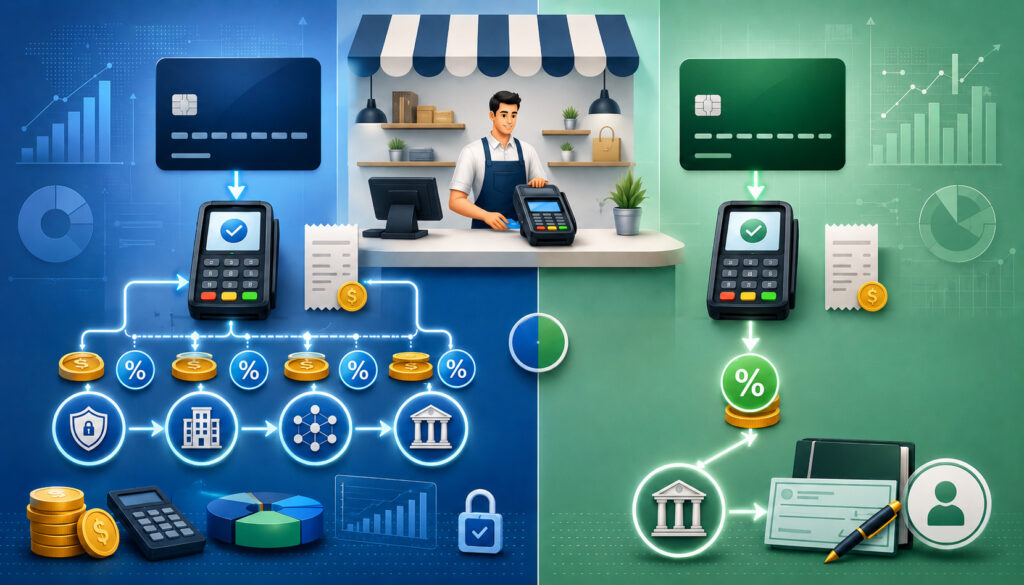
Credit card interchange fees and debit card interchange fees are related but not identical. Both are card interchange fees, but they can be affected by different rules, risk levels, transaction methods, and card account structures.
Credit card transactions involve a credit line. The issuing bank may be extending credit to the cardholder, managing repayment risk, funding rewards, and supporting fraud protections.
Because of these features, credit card interchange fees may vary significantly by card type. Standard cards, rewards cards, premium cards, business cards, and commercial cards may each fall into different categories.
Debit card transactions draw from a deposit account. Debit card interchange fees may be affected by whether the transaction is PIN-based or signature-based, whether the issuer is subject to debit interchange rules, and whether the transaction is routed through available debit networks.
Regulation II establishes standards for certain debit card interchange fees and includes a cap for covered issuers, with a fraud-prevention adjustment when eligible.
This difference is one reason a merchant’s card mix matters. A business with many debit card payments may see different payment processing costs than a business with many premium credit cards or commercial cards. A business with mostly online credit card payments may also see different costs than a store with mostly in-person debit card transactions.
Credit Card Interchange Fees
Credit card interchange fees can vary based on card type, transaction environment, merchant category code, and risk profile. A standard consumer credit card may fall into one category, while a rewards card, premium card, or commercial card may fall into another.
Rewards cards may cost more to accept because the issuing bank supports reward programs and cardholder benefits. Commercial cards may also price differently because they are often used for business purchases, higher ticket sizes, invoice payments, and enhanced reporting.
Transaction method also matters. A chip or contactless card-present transaction may have a different risk profile than a keyed transaction or online transaction. If the card is not physically present, the payment may require stronger fraud screening, address verification, CVV checks, tokenization, or additional authentication steps.
Credit card interchange fees are often one of the largest components of total credit card processing fees. However, the merchant’s final cost still depends on the full pricing model, including assessment fees, processor markup, gateway fees, and other merchant account fees.
Debit Card Interchange Fees
Debit card interchange fees can differ from credit card interchange fees because debit cards pull money from the cardholder’s bank account rather than a credit line. Debit transactions may be PIN-based, signature-based, card-present, card-not-present, online, recurring, or routed through different debit networks.
PIN debit transactions may have different cost structures than signature debit transactions. The merchant’s payment setup, terminal configuration, network routing options, and transaction environment can influence how debit transactions are processed.
Some debit card transactions are subject to regulated debit standards, while others are exempt. This distinction can affect debit card processing fees. A merchant may not always be able to tell the difference at checkout, but the statement may show different debit categories.
For businesses with many small-ticket transactions, debit costs can be especially important because per-transaction fees may have a larger effect on effective rate. A small fixed fee matters more on a low-dollar ticket than on a high-dollar ticket.
What Factors Affect Interchange Rates?
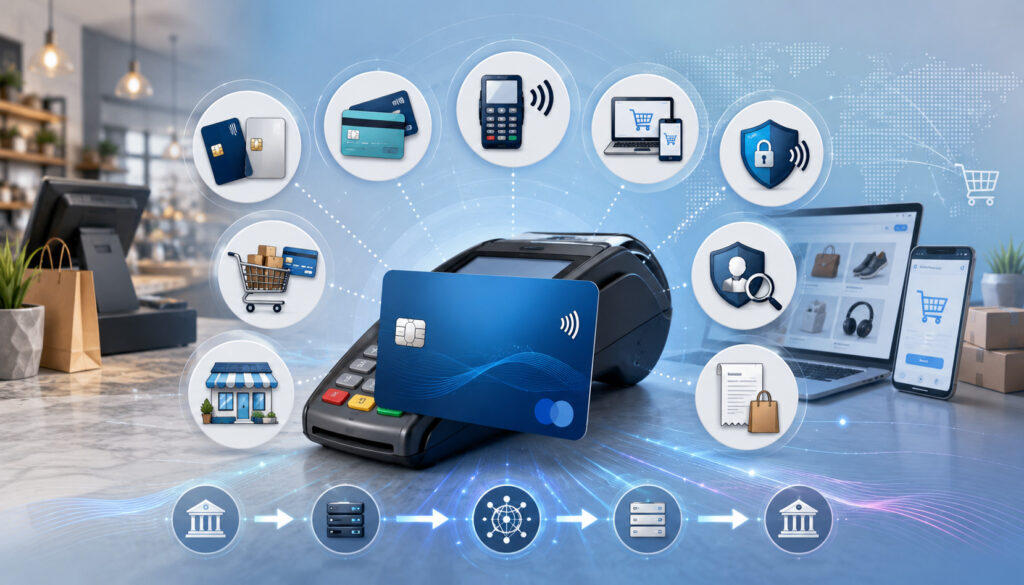
Interchange rates are not random. They are determined by rules and categories connected to the card, merchant, transaction, and processing details. The most common factors include card type, transaction method, merchant category code, transaction size, risk level, settlement timing, data quality, and whether the transaction meets required processing conditions.
A business that accepts mostly card-present transactions may see different interchange patterns than a business that accepts mostly eCommerce payments.
A company with many commercial card payments may see different costs than one with mostly debit cards. A merchant that frequently keys card numbers manually may see different costs than one using secure chip or contactless acceptance.
Interchange rate categories can also depend on the merchant category code, or MCC. The MCC describes the type of business. It helps card networks and issuers classify the transaction. Certain industries, ticket sizes, and transaction patterns may have specific rules.
Data quality can also matter. If required transaction details are missing, if settlement is delayed, or if the transaction is handled incorrectly, it may fall into a less favorable category. This is sometimes called a downgrade in merchant statement discussions.
Card Type
Card type is one of the biggest factors affecting interchange rates. Debit cards, credit cards, rewards cards, premium cards, business cards, prepaid cards, and commercial cards may each carry different cost structures.
A basic debit card transaction may price differently than a premium rewards credit card. A commercial card used for business purchasing may price differently from a consumer credit card. A card tied to enhanced reporting or business spend controls may require additional data to qualify for certain categories.
Merchants cannot control what card a customer chooses to use. However, they can understand how card mix affects total payment processing costs. If more customers begin using rewards cards or commercial cards, total card payment fees may rise even if sales volume stays the same.
Statement review helps identify these changes. A merchant may notice more premium card categories, more commercial card volume, or fewer debit transactions than before. These shifts can explain why effective rate changes from one month to the next.
Transaction Method
Transaction method affects interchange because different payment methods carry different levels of verification and risk. A chip card inserted into an EMV terminal provides stronger card authentication than a manually keyed card number. A contactless payment can also carry secure transaction data when processed properly.
Card-present transactions include chip, tap, swipe, and mobile wallet payments made at a physical checkout. Card-not-present transactions include online checkout, keyed payments, invoices, phone orders, recurring billing, and stored credential payments.
Keyed transactions often carry more risk because the physical card may not be verified by the terminal. Online transactions also carry fraud risk because the buyer and card are not physically present. These transactions may require additional checks, such as AVS, CVV, tokenization, fraud filters, and secure checkout controls.
Merchants should avoid keying cards unnecessarily when secure card-present acceptance is available. Staff training, reliable terminals, mobile card readers, and integrated POS systems can help reduce avoidable keyed volume.
Merchant Category Code
A merchant category code, or MCC, identifies the type of business accepting the payment. It helps classify transactions within the card payment system. Examples may include retail, restaurant, lodging, professional services, digital goods, healthcare, subscription services, or business-to-business categories.
MCC matters because some interchange categories are tied to business type. A restaurant transaction with tip adjustment may be treated differently from a retail transaction. A B2B invoice payment may have different data requirements than a basic consumer sale.
Merchants usually receive an MCC during account setup or underwriting. The code should match the business’s actual activity. If a business changes its model, adds online sales, expands into new services, or processes a different type of transaction, it may need to review whether its setup still reflects the business accurately.
An incorrect or outdated MCC can create confusion in reporting and may affect transaction qualification. Businesses should ask questions if statement categories appear inconsistent with their actual operations.
Transaction Data Quality
Transaction data quality refers to the completeness and accuracy of the information sent with the payment. This may include card data, authorization data, sales amount, tax amount, customer verification data, invoice details, merchant category code, settlement timing, and other transaction fields.
Missing or incorrect data can affect how transactions are categorized. For example, if a transaction is authorized but not settled within the expected timeframe, it may not qualify as intended. If an online payment lacks useful verification data, it may carry higher risk signals.
B2B transactions may require more detailed information, such as tax data, invoice data, customer codes, or line-item details, depending on the card and processing setup. Submitting enhanced data can help some transactions qualify correctly under applicable rules.
Data quality is partly a technology issue and partly an operations issue. A reliable POS system, payment gateway, virtual terminal, and accounting workflow can reduce errors. Staff training can also prevent avoidable mistakes such as incorrect manual entry, delayed batches, or mismatched refund handling.
Interchange Fees vs Other Payment Processing Fees
Interchange fees are only one part of total payment processing costs. Merchants often pay a combination of interchange, card network fees, assessment fees, processor markup, transaction fees, gateway fees, monthly service fees, chargeback fees, statement fees, PCI-related fees, batch fees, and other merchant account fees.
This distinction matters because interchange is not usually the only cost a merchant should review. A business may have reasonable interchange costs but high processor markup.
Another business may have simple flat-rate pricing that is easy to understand but does not show detailed interchange categories. Another may have tiered pricing that groups transactions in a way that makes costs harder to compare.
Assessment fees and card network fees are typically associated with the card network side of the transaction. Processor markup is the provider’s fee for processing services, reporting, support, risk management, and account operations. Gateway fees may apply to online transactions, invoice payments, recurring billing, and virtual terminal activity.
Monthly fees may include account maintenance, reporting, PCI-related services, statement access, equipment, software, or support. Chargeback fees may apply when a customer disputes a transaction. Batch fees may apply when transactions are closed and submitted for settlement.
The key is to separate cost categories. Interchange fees may be less negotiable because they are tied to card network rate categories. Processor markup, monthly fees, gateway fees, and some service charges may be more comparable across providers or pricing models.
Interchange Fee Breakdown Table
The table below shows common payment cost components and what merchants should review. Exact labels vary by processor and statement format.
| Payment cost component | Who may receive it | What it usually covers | How it may appear | What merchants should review |
| Interchange fees | Issuing bank | Card account risk, authorization, settlement participation, fraud exposure, rewards support | Interchange, interchange detail, base cost, card category | Card type, transaction method, category names, settlement timing |
| Assessment fees | Card network | Network access, brand rules, transaction routing, network operations | Assessment, network fee, card brand fee | Whether assessments are separated or bundled |
| Processor markup | Processor or merchant services provider | Processing service, support, reporting, risk tools, account operations | Discount fee, markup, basis points, per-item fee | Percentage markup, flat fees, changes from prior months |
| Gateway fees | Gateway or processor | Online checkout, virtual terminal, invoice payments, recurring billing | Gateway fee, monthly gateway, transaction gateway fee | Online volume, per-transaction cost, duplicate tools |
| Authorization fees | Processor or network-related billing | Requesting approval for transactions | Auth fee, transaction fee, per-item fee | Transaction count and average ticket size |
| Monthly fees | Provider or service platform | Account maintenance, reporting, support, software access | Monthly service fee, statement fee, account fee | Whether fees match the agreement |
| Chargeback fees | Processor or acquiring side | Dispute handling and administrative cost | Chargeback fee, retrieval fee, dispute fee | Chargeback count, reason codes, prevention steps |
| Batch fees | Processor or acquiring side | Batch closing and settlement submission | Batch fee, settlement fee | Number of batches and daily close process |
| PCI-related fees | Provider or security program | Compliance tools, validation support, or non-compliance charges | PCI fee, non-compliance fee | Whether compliance status is current |
| Equipment or software fees | Provider or software platform | Terminals, POS software, reporting tools | Terminal fee, lease, software fee | Contract terms, ownership, cancellation terms |
This table helps merchants see why “card fees” are not one single item. Interchange may be the largest piece, but total cost depends on the entire stack.
How Interchange Pricing Models Work
Pricing models determine how interchange fees and other payment costs are presented to the merchant. The same transaction may be billed differently depending on whether the merchant uses interchange-plus pricing, flat-rate pricing, tiered pricing, subscription-style pricing, or blended pricing.
The pricing model does not usually change the underlying card network interchange category. Instead, it changes how the merchant sees and pays for that cost. In some models, interchange is clearly itemized. In others, it is blended into a simple rate.
A transparent model can make review easier, but no model is automatically best for every business. The right fit depends on transaction volume, average ticket size, card mix, online volume, accounting needs, reporting preferences, and the merchant’s ability to review detailed statements.
Businesses should compare total cost, not just advertised rates. A low percentage may come with high per-transaction fees. A simple flat rate may be convenient but may not show whether debit cards, credit cards, rewards cards, and commercial cards are priced differently. A tiered plan may appear simple but can make transaction classification harder to understand.
Interchange-Plus Pricing
Interchange-plus pricing separates the base interchange cost from processor markup. It is often shown as interchange plus a stated percentage and a fixed per-transaction fee. For example, the “plus” portion may be a processor markup expressed in basis points and cents per transaction.
This model can make statements more transparent because merchants can see interchange categories, assessment fees, and provider markup more clearly. That makes it easier to identify what is controlled by card network categories and what is controlled by the processor or service provider.
Interchange-plus pricing may be helpful for businesses that want detailed cost visibility, especially those with higher volume, mixed card types, multiple sales channels, or finance teams reviewing statements monthly.
However, interchange-plus statements can be more detailed and may require more review. A business should understand category names, card mix, transaction count, average ticket size, and effective rate to make the most of the transparency.
Flat-Rate Pricing
Flat-rate pricing blends payment costs into a simple percentage, often with a fixed transaction fee. It is easy to understand because the merchant does not need to review many interchange categories to estimate costs.
This model can be convenient for small businesses, startups, mobile sellers, and merchants that prefer predictable billing. It may also simplify bookkeeping because the pricing structure is easier to explain internally.
The tradeoff is reduced detail. Since interchange fees, assessment fees, and processor costs are blended, merchants may not know how much of the fee is interchange and how much is markup. This can make cost comparison harder as volume grows.
Flat-rate pricing may be easier at the beginning, but businesses should review whether it still fits as sales increase, average ticket size changes, or card mix shifts. A simple model is not always the lowest-cost model.
Tiered Pricing
Tiered pricing groups transactions into categories such as qualified, mid-qualified, and non-qualified. The merchant pays based on the tier assigned to each transaction. The tiers may be easier to read than detailed interchange categories, but they can also make the underlying cost harder to analyze.
A transaction may fall into a higher tier because of card type, rewards status, keyed entry, delayed settlement, missing data, or card-not-present risk. Merchants should understand how transactions are classified and what causes movement between tiers.
The challenge with tiered pricing is that it may not show interchange and markup separately. A business may see many non-qualified transactions without clearly understanding the base interchange cost versus the added pricing spread.
Merchants using tiered pricing should review monthly statements carefully. If many transactions fall into higher tiers, the business should ask what is driving that classification and whether payment practices can be improved.
Why Interchange Fees Vary by Transaction Type
Interchange fees vary because not every transaction carries the same risk, data quality, card type, or processing environment. Two businesses can process the same sales volume and still pay different total card payment fees because their transaction mix is different.
Card-present transactions usually involve stronger verification because the card or mobile wallet is physically used at the point of sale. Chip cards and contactless payments can provide secure transaction data. These payments may be treated differently from card-not-present transactions.
Card-not-present transactions include online payments, keyed payments, phone orders, invoices, recurring billing, and stored card payments. These transactions may involve higher fraud risk because the buyer and physical card are not present. They may also lead to more chargeback exposure if verification and documentation are weak.
Commercial cards and rewards cards may also affect costs. A B2B company accepting large invoice payments from commercial cards may see different interchange categories than a retail store accepting standard consumer debit cards.
A subscription company may see recurring billing categories, stored credential indicators, failed payment retries, and chargeback prevention issues.
High-ticket transactions can make percentage fees more noticeable. Low-ticket transactions can make flat per-transaction fees more important. Delayed settlement can affect qualification. Missing data can cause transactions to fall into less favorable categories.
The main lesson is that interchange is not one universal fee. It is a classification system based on transaction details.
Card-Present vs Card-Not-Present Interchange Fees
Card-present and card-not-present transactions are two of the most important categories merchants should understand. They affect interchange, fraud risk, chargeback exposure, payment security, and statement review.
A card-present transaction happens when the customer uses the card, chip, contactless card, or mobile wallet at a physical terminal. These transactions often include stronger verification because the card or device is present. EMV chip and contactless payments can send secure transaction data, reducing certain types of counterfeit card risk.
A card-not-present transaction happens when the card is not physically presented to the merchant. This includes eCommerce checkout, keyed transactions, phone orders, invoice payments, recurring payments, and stored card billing. These payments rely on entered card details, stored credentials, gateway controls, fraud filters, AVS, CVV, and other verification tools.
Card-not-present transactions may carry higher risk because fraudsters can attempt payments using stolen card data without having the physical card. This can lead to different interchange rate categories and higher chargeback exposure.
In-Person Transactions
In-person transactions usually occur through a payment terminal, POS system, mobile reader, or integrated checkout device. Customers may insert chip cards, tap contactless cards, use mobile wallets, or swipe magnetic stripe cards when needed.
Chip and contactless payments provide stronger transaction data than manual entry. This can help reduce avoidable risk and support cleaner transaction records. It also helps staff avoid keying card numbers when the customer is present.
For retailers, restaurants, salons, medical offices, repair shops, and mobile sellers, secure in-person acceptance can be an important part of cost management. It does not eliminate interchange fees, but it can help transactions route and qualify according to the correct card-present environment.
In-person businesses should train staff to use chip or tap when available, close batches on time, verify tip adjustment procedures, and avoid manual entry unless necessary. These habits support better payment operations and cleaner statements.
Online and Keyed Transactions
Online and keyed transactions fall into the card-not-present environment. This includes eCommerce checkout, payment links, virtual terminal entries, phone orders, invoice payments, recurring billing, and card-on-file transactions.
These transactions can be convenient for customers and essential for modern businesses, but they require stronger controls. Merchants should use secure checkout pages, payment gateways, AVS, CVV, tokenization, encryption, fraud filters, and clear order documentation.
Keyed transactions deserve special attention. If a customer is standing at the counter and the card can be tapped or inserted, keying the card manually may create unnecessary cost and risk. Keyed transactions may also create weaker evidence if a dispute occurs.
Online businesses should monitor fraud attempts, chargeback ratios, refund patterns, failed payment retries, and suspicious order behavior. Better fraud prevention can support healthier payment operations, even when it does not directly change every interchange category.
How Interchange Fees Affect Small Business Costs
Interchange fees affect small business costs because they are tied to every card transaction. Even small differences can matter when a business processes many payments. For businesses with tight margins, payment processing costs can influence pricing, cash flow, reconciliation, and profitability.
A restaurant may process hundreds of small card transactions each day. A retail store may handle a mix of debit, credit, contactless, and rewards cards. An online seller may process higher card-not-present volume and more refunds. A B2B company may process fewer transactions but larger invoices, often with commercial cards.
Each pattern creates different cost pressure. A low-ticket business may be heavily affected by flat per-transaction fees. A high-ticket business may be more affected by percentage-based fees. A business with many premium rewards cards may see higher credit card processing fees than one with more debit payments.
Interchange fees also affect cash flow because processing costs reduce the amount retained from card sales. Depending on the funding method, fees may be deducted before deposit or billed later. This affects bookkeeping and payment reconciliation.
Effective Rate
Effective rate is a practical way to understand total payment processing costs. It is calculated by dividing total processing fees by total card sales, then multiplying by one hundred.
For example, if a business reviews a monthly statement, it should identify total card volume and total fees. Total fees should include interchange, assessment fees, processor markup, gateway fees, transaction fees, monthly fees, and other processing-related charges. This gives a fuller picture than looking at only one rate line.
Effective rate helps compare cost trends across months. If the effective rate rises, the business can investigate whether the cause is card mix, online volume, keyed transactions, refunds, chargebacks, average ticket changes, or new merchant service fees.
Effective rate is not perfect because business models differ. A high-risk online seller and a local in-person retailer may have different expected cost patterns. Still, it is a useful starting point for statement review.
Average Ticket Size
Average ticket size is the average dollar amount per transaction. It is usually calculated by dividing total card volume by transaction count. This number helps merchants understand how percentage fees and flat fees affect total cost.
Per-transaction fees matter more when ticket size is low. A fixed transaction fee on a small purchase can represent a larger share of the sale. This is why coffee shops, convenience stores, quick-service restaurants, and small-ticket retailers should review transaction count carefully.
Percentage fees matter more as ticket size rises. A service business processing large invoices may focus more on percentage markup, card type, commercial card categories, and interchange qualification.
Average ticket size also affects pricing decisions. Businesses should understand whether their payment costs are driven more by transaction count or transaction value. This helps them compare pricing models more responsibly.
Transaction Mix
Transaction mix refers to the types of payments a business accepts. It includes debit cards, credit cards, rewards cards, commercial cards, card-present transactions, card-not-present transactions, keyed payments, online payments, recurring payments, and mobile payments.
A business with mostly in-person debit transactions may have a different cost profile than one with mostly online credit card payments. A B2B seller accepting many commercial cards may have a different profile than a restaurant accepting mostly consumer cards.
Transaction mix can change over time. A retail store may add eCommerce sales. A service business may start accepting invoice links. A restaurant may add online ordering. A subscription business may increase recurring card-on-file payments.
Merchants should review transaction mix monthly. If costs rise, the statement may show that card-not-present volume increased, commercial card usage grew, or more transactions were keyed manually.
Can Merchants Control Interchange Fees?
Merchants generally cannot directly set interchange rates. Interchange categories are established through card network rules and payment system requirements.
However, merchants may be able to influence some cost outcomes by improving payment practices, submitting accurate data, reducing avoidable keyed transactions, settling batches on time, and reviewing statements regularly.
This is an important distinction. Businesses should not expect to eliminate interchange fees. Card acceptance has a cost. The practical goal is to understand costs, avoid preventable downgrades or operational mistakes, reduce unnecessary risk, and compare pricing models carefully.
Merchants can control how payments are accepted. For example, using chip or contactless acceptance when the card is present can reduce manual-entry risk. Closing batches on time can support proper settlement. Using a secure payment gateway can improve online payment handling. Clear refund policies and good documentation can reduce disputes.
Merchants can also control how they review payment costs. A business that studies statements monthly is more likely to notice new fees, rising effective rate, unusual chargebacks, increased keyed volume, or unexpected gateway charges.
Use the Right Payment Entry Method
The payment entry method matters. When a customer is present with a card, the business should use secure card-present methods whenever possible. Chip cards, contactless cards, and mobile wallets generally provide better transaction data than manually keyed entries.
Manual entry may be necessary in some cases, such as phone orders, invoice payments, damaged cards, or certain service transactions. However, unnecessary keyed transactions can increase risk and may affect processing categories.
Staff training is important. Employees should know how to troubleshoot terminals, avoid bypassing chip prompts, use contactless acceptance, and recognize when manual entry is appropriate. A business should also keep terminals and POS systems working properly so staff are not forced to key cards because of equipment problems.
For mobile businesses, a secure mobile reader may be better than keying card details into a virtual terminal. For service businesses, payment links or secure invoice tools may be better than collecting card numbers manually.
Settle Transactions on Time
Settlement timing can affect transaction qualification. After authorization, transactions usually need to be captured and batched within expected timeframes. Delayed settlement may cause a transaction to fall into a different category.
Businesses should understand their batch process. Some POS systems close batches automatically. Others require manual batch closing. Restaurants may need to account for tip adjustments before settlement. Service businesses may authorize before final capture. eCommerce sellers may authorize when an order is placed and capture when it ships.
Late batches can create funding delays and statement confusion. They may also affect reconciliation because sales dates, batch dates, and deposit dates may not match. A clear closing process helps prevent these issues.
Merchants should review batch settlement reports regularly. If deposits do not match expected sales, batch timing is one of the first places to look.
Review Statements Regularly
Monthly statement review is one of the most practical habits a merchant can build. A processing statement may show sales volume, transaction count, average ticket size, interchange categories, assessment fees, processor markup, gateway fees, chargebacks, refunds, and monthly account fees.
Merchants should compare each statement with prior months. Look for changes in effective rate, card-not-present volume, keyed transactions, card mix, chargebacks, gateway fees, and new line items.
Statement review also helps with accounting. Gross sales and net deposits are not always the same. Refunds, chargebacks, reserves, adjustments, and fees can create differences. A finance team or bookkeeper needs these details for accurate reconciliation.
A good review process does not require panic over every small change. It simply creates visibility. When merchants understand their payment patterns, they can ask better questions and make better operational decisions.
Common Interchange-Related Mistakes to Avoid
Many interchange-related mistakes come from misunderstanding how payment costs work. The most common mistake is confusing interchange fees with total processing fees. Interchange is only one part of the cost. A merchant may also pay assessment fees, processor markup, gateway fees, monthly fees, statement fees, chargeback fees, and other merchant service fees.
Another mistake is assuming all cards cost the same. Debit cards, credit cards, rewards cards, premium cards, and commercial cards may fall into different interchange categories. A change in customer card mix can affect costs even if sales volume stays stable.
Businesses also make mistakes by keying transactions unnecessarily. If the card is present, secure terminal acceptance is usually better than manual entry. Keyed transactions may increase fraud risk, chargeback risk, and cost.
Delayed settlement is another avoidable issue. Transactions should be batched according to the business’s payment setup and applicable rules. Late batches can create funding delays, reconciliation problems, and category changes.
Merchants should also avoid focusing only on advertised rates. A low headline rate may not include gateway fees, monthly fees, per-transaction fees, PCI-related fees, batch fees, or chargeback fees. Total cost matters more than a single number.
Finally, merchants should not ignore chargebacks. Chargebacks can create fees, lost revenue, operational burden, and risk concerns. Clear billing descriptors, refund policies, order documentation, delivery confirmation, and customer communication can help reduce avoidable disputes.
How to Read a Processing Statement for Interchange Costs
A processing statement can look complicated, but merchants can review it in a consistent order. Start with total card volume, then transaction count, average ticket size, total fees, interchange detail, assessment fees, processor markup, refunds, chargebacks, deposits, and effective rate.
Some statements show interchange categories clearly. Others bundle costs into discount fees or tiered categories. If the statement does not show enough detail, merchants may need to ask for a more detailed breakdown.
The purpose of statement review is not only to find mistakes. It is also to understand patterns. A merchant may learn that online transactions are increasing, commercial card usage is rising, refunds are affecting deposits, or keyed transactions are more common than expected.
Internal guides such as merchant statement audits, interchange-plus pricing, reducing payment processing costs, and hidden merchant service fees can support deeper statement review.
Identify the Total Card Volume
Total card volume is the starting point for understanding payment costs. It shows how much card activity the business processed during the statement period. This may include credit cards, debit cards, card-present transactions, card-not-present transactions, refunds, and adjustments.
Merchants should compare statement volume with POS reports, eCommerce reports, gateway reports, and accounting records. Differences may occur because one system reports by sale date while another reports by settlement date.
Gross volume and net volume are not always the same. Gross volume may show total sales before refunds and chargebacks. Net volume may subtract refunds, credits, or disputes. Processing fees may be deducted daily or monthly depending on the account setup.
Once total volume is confirmed, merchants can compare it with total fees to calculate effective rate. This gives a practical view of payment processing costs.
Separate Interchange From Markup
Separating interchange from markup helps merchants understand what they can and cannot easily compare. Interchange is tied to card network categories and issuing bank compensation. Processor markup is the provider-controlled portion added for processing services.
In interchange-plus pricing, this separation is usually clearer. The statement may show interchange categories, assessment fees, and markup separately. In flat-rate or tiered pricing, costs may be bundled.
This separation matters during pricing review. A merchant may not be able to change the fact that a premium rewards card has a different category from a debit card. However, the merchant may be able to compare processor markup, gateway fees, monthly charges, and transaction fees.
Merchants should avoid asking only, “What is my rate?” A better question is, “What portion is interchange, what portion is assessment, and what portion is markup or service cost?”
Look for Transaction Patterns
Transaction patterns explain many fee changes. If card-not-present volume increases, processing costs may rise. If more customers use rewards cards or commercial cards, interchange may change. If staff key more transactions, costs and risk may increase.
Batch timing can also create patterns. Late batch settlement may affect qualification and funding timing. Restaurants should review tip adjustments and closeout procedures. eCommerce businesses should compare authorization dates, capture dates, and shipment timing.
Refunds and chargebacks also matter. Refunds reduce net deposits, while chargebacks can add fees and remove funds. A merchant may incorrectly blame processing rates when the real issue is increased disputes or refund volume.
Pattern review should become a monthly routine. It helps businesses understand whether cost changes are caused by pricing, operations, customer behavior, sales channels, or risk activity.
Interchange Fees and Payment Security
Payment security connects to interchange and processing costs indirectly. Secure payment practices may not reduce every fee automatically, but they can reduce fraud exposure, chargebacks, manual errors, and data compromise risk.
Security tools include EMV chip acceptance, contactless payments, tokenization, encryption, secure payment gateways, AVS, CVV, fraud filters, strong passwords, access controls, and careful handling of cardholder data.
The PCI Security Standards Council provides security resources for merchants that handle payment card data and emphasizes the importance of protecting cardholder information. (PCI Security Standards Council)
For in-person businesses, EMV and contactless acceptance help reduce certain card-present risks. For online businesses, secure checkout, tokenization, fraud screening, and order verification can reduce suspicious transactions and disputes.
For service businesses, collecting card details casually by phone, paper forms, text message, or email can create security and compliance concerns. A secure invoice link, hosted payment page, or virtual terminal with proper controls is usually safer.
Payment security also supports better documentation. If a chargeback occurs, clear authorization records, order details, delivery confirmation, refund policies, and customer communication may help the business respond more effectively.
Interchange Fees for Different Business Types
Interchange cost patterns vary by business model. A retail store, restaurant, eCommerce business, service provider, B2B company, subscription business, and mobile seller may all accept cards, but their payment environments are different.
The main differences include card-present versus card-not-present volume, average ticket size, refund patterns, chargeback exposure, card type mix, settlement timing, and data requirements. Businesses should review interchange fees in the context of how they actually get paid.
A store that accepts mostly tap and chip payments may focus on terminal reliability and batch settlement. An online seller may focus on fraud prevention and gateway reporting.
A B2B company may focus on commercial cards and enhanced data. A subscription business may focus on recurring billing, failed payments, stored credentials, and chargeback prevention.
Retail Stores
Retail stores often process many card-present transactions through POS terminals. Customers may tap, insert, swipe, or use mobile wallets. Because the customer and card are present, these transactions may have different risk characteristics from online or keyed payments.
Retailers should monitor average ticket size, debit versus credit mix, rewards card usage, and contactless adoption. They should also train staff to avoid unnecessary manual entry and to follow terminal prompts correctly.
Refunds and exchanges should be handled consistently. Poor refund handling can create reconciliation problems and customer disputes. Clear receipts, accurate inventory records, and consistent return policies help support payment review.
Retailers should compare POS reports with processing statements. If card-present volume drops while keyed or online volume rises, total costs may change.
Restaurants and Food Businesses
Restaurants and food businesses have unique payment patterns because of tips, adjustments, tabs, split checks, delivery orders, online ordering, and batch closeout timing. These details can affect statement review and reconciliation.
Tip adjustments should be handled correctly before settlement. If batches are closed late or tips are entered incorrectly, deposits and reporting may become harder to match. Restaurants should also watch average ticket size and transaction count because small-ticket sales can make per-transaction fees more noticeable.
Card mix can vary by restaurant type. Quick-service locations may see many debit and contactless transactions. Full-service restaurants may see more credit cards, tips, and batch adjustments. Delivery and online ordering may increase card-not-present volume.
Restaurants should review chargebacks carefully. Disputes may involve duplicate charges, tip confusion, unrecognized billing descriptors, or delivery issues. Good receipts and clear customer communication help reduce confusion.
eCommerce Businesses
eCommerce businesses usually process card-not-present transactions. Customers enter card details online or use stored credentials, wallets, or checkout accounts. Because the card is not physically presented, fraud screening and transaction data quality are important.
Online merchants should use secure checkout, AVS, CVV, tokenization, fraud filters, clear order confirmations, shipping records, and refund policies. These practices help manage fraud risk and chargeback exposure.
eCommerce payment fees may include gateway fees, fraud tool fees, per-transaction charges, and card-not-present interchange categories. Refunds and chargebacks may also affect net deposits and effective rate.
Online sellers should review approval rates, failed payments, suspicious orders, refund ratios, and dispute patterns. Payment cost management is closely tied to fraud prevention and customer service.
Service Businesses
Service businesses often accept invoice payments, deposits, card-on-file payments, mobile payments, keyed transactions, and recurring payments. Examples may include repair services, professional services, medical offices, home services, and appointment-based businesses.
Because service payments are often remote or invoice-based, card-not-present volume may be higher. Keyed payments may also occur if staff enter card details manually. Businesses should use secure payment links, virtual terminals, or mobile readers to reduce risky handling.
Deposits and partial payments can complicate reconciliation. A business may authorize one amount, capture another, refund a portion, or bill the remaining balance later. Clear records are essential.
Service businesses should review whether card-on-file practices, recurring billing permissions, receipts, and refund terms are documented properly. Good documentation helps prevent disputes and supports accurate accounting.
B2B Businesses
B2B businesses may accept commercial cards, purchasing cards, corporate cards, and invoice payments. These cards may have different interchange categories from consumer cards and may require enhanced transaction data.
Larger ticket sizes can make percentage fees more noticeable. A small percentage difference on a large invoice can be significant. B2B merchants should review commercial card volume, average ticket size, interchange categories, and data requirements.
Some B2B transactions may benefit from sending more complete invoice or tax data when supported by the payment setup. This requires coordination between payment systems, invoicing tools, accounting software, and staff workflows.
B2B companies should also evaluate whether card acceptance fits each payment scenario. For some large invoices, businesses may compare card payments with other electronic payment methods while considering speed, customer preference, risk, and reconciliation needs.
Subscription Businesses
Subscription businesses rely on recurring billing and stored payment credentials. Their cost patterns may include card-not-present interchange categories, failed payment retries, account updater tools, chargeback prevention, refund handling, and gateway fees.
Recurring billing creates convenience, but it also requires careful customer communication. Customers should understand billing frequency, cancellation terms, renewal timing, and refund policies. Confusion can lead to disputes.
Failed payments can increase operational cost. Subscription businesses should monitor decline codes, retry logic, expired cards, and customer update workflows. Tokenization and secure storage practices are important for protecting card data.
Chargeback prevention is especially important for subscriptions. Clear descriptors, renewal reminders, receipts, cancellation options, and support access can reduce preventable disputes.
Interchange Fee Review Checklist
Use this checklist to review interchange fees and broader payment processing costs each month.
| Review item | What to check | Why it matters | Notes |
| Pricing model | Interchange-plus, flat-rate, tiered, blended, subscription-style | Determines fee visibility | Confirm how interchange appears |
| Monthly volume | Total card sales | Starting point for cost review | Compare with POS and accounting reports |
| Effective rate | Total fees divided by total card volume | Shows real cost of acceptance | Track month over month |
| Card mix | Debit, credit, rewards, commercial cards | Card type affects categories | Watch shifts in premium or business cards |
| Transaction method | Chip, tap, swipe, keyed, online, recurring | Risk and data quality affect cost | Reduce avoidable keyed entry |
| Card-not-present volume | Online, invoice, phone, virtual terminal | Remote payments may cost differently | Monitor fraud and chargebacks |
| Keyed transactions | Manual card entry count | Can increase risk and cost | Train staff and use secure tools |
| Batch timing | Daily close and settlement timing | Late settlement may affect reporting | Review batch reports |
| Refunds | Refund count and volume | Reduces deposits and affects reconciliation | Match to sales records |
| Chargebacks | Dispute count, reason codes, fees | Impacts revenue and risk | Track preventable causes |
| Gateway fees | Monthly and per-transaction gateway costs | Adds to eCommerce payment fees | Avoid duplicate tools |
| Processor markup | Percentage and per-item markup | More comparable than interchange | Compare with agreement |
| Statement notes | New fees or changed labels | Finds billing changes | Document questions monthly |
This checklist helps businesses avoid reviewing interchange in isolation. The full cost of acceptance includes interchange, card network fees, processor costs, gateway tools, risk events, and operational habits.
Best Practices for Managing Payment Processing Costs
Businesses cannot control every part of payment processing costs, but they can manage the way payments are accepted, reviewed, and reconciled. The best approach is consistent, practical, and based on accurate information.
Start by understanding the pricing model. Know whether the account uses interchange-plus pricing, flat-rate pricing, tiered pricing, blended pricing, or subscription-style pricing. Each model presents interchange differently.
Review statements monthly. Compare total volume, total fees, effective rate, transaction count, card mix, refunds, chargebacks, batch timing, and gateway fees. Look for patterns rather than reacting to one line item.
Reduce unnecessary keyed transactions. Use secure card-present acceptance when the card is present. For remote payments, use secure invoice links, hosted checkout, or virtual terminal tools rather than informal card collection.
Improve checkout security. Use EMV terminals, contactless acceptance, tokenization, encryption, secure payment gateways, AVS, CVV, and fraud screening where appropriate.
Settle batches on time. Daily closeout procedures help reduce reporting confusion and support proper transaction handling.
Train staff. Many payment cost issues come from operational habits, such as keying cards, delaying batch close, entering tips incorrectly, or mishandling refunds.
Monitor chargebacks. Disputes can increase fees, reduce revenue, and create risk concerns. Clear policies, accurate descriptors, receipts, delivery records, and customer support can reduce avoidable disputes.
Compare total cost, not just rates. A pricing model should be evaluated by effective rate, service fees, gateway costs, monthly charges, statement clarity, support, and operational fit.
FAQs
What are interchange fees?
Interchange fees are transaction-based card payment fees connected to the payment flow between the merchant’s acquiring side and the customer’s issuing bank. In merchant cost discussions, interchange is often treated as the base cost of accepting credit cards and debit cards.
Interchange fees are usually part of the total payment processing fees a merchant pays. They may appear separately on detailed statements or may be bundled into a flat-rate or tiered pricing structure.
Who receives interchange fees?
The cardholder’s issuing bank generally receives interchange. The issuing bank provides the customer’s card account, reviews authorization requests, participates in settlement, manages fraud exposure, and supports cardholder services.
Merchants typically see interchange as part of their broader merchant service fees. The payment processor, acquiring bank, and card network may also be involved in the flow, but their fees may be separate from interchange.
Are interchange fees the same as processing fees?
No. Interchange fees are only one part of processing fees. Total credit card processing fees or debit card processing fees may include interchange, assessment fees, processor markup, gateway fees, transaction fees, monthly fees, chargeback fees, PCI-related fees, and other merchant account fees.
This distinction matters because merchants may have limited control over interchange categories but more ability to review provider markup, monthly fees, gateway costs, and service charges.
Why do interchange rates vary?
Interchange rates vary because transactions differ by card type, transaction method, merchant category code, risk level, settlement timing, and data quality. A card-present debit transaction may be different from an online premium rewards credit card transaction.
Other factors include commercial cards, recurring billing, keyed entry, card-not-present risk, transaction size, and whether the transaction meets required processing conditions.
What is the difference between credit card interchange fees and debit card interchange fees?
Credit card interchange fees are connected to credit card transactions, where the issuing bank provides a credit line and may support rewards, fraud controls, and repayment risk. Debit card interchange fees are connected to debit card transactions, where funds are usually drawn from a deposit account.
Debit transactions may also be affected by PIN debit, signature debit, network routing, and regulated or exempt debit treatment. Credit card transactions may vary more by rewards level, premium card type, and commercial card use.
Are online transactions more expensive than in-person transactions?
Online transactions may cost more in many cases because they are card-not-present transactions. The card and customer are not physically verified at a terminal, which can increase fraud risk and chargeback exposure.
That does not mean online payments are bad. They are essential for many businesses. Merchants should use secure payment gateways, AVS, CVV, tokenization, fraud filters, clear refund policies, and strong order documentation.
What is interchange-plus pricing?
Interchange-plus pricing is a pricing model that separates interchange costs from the processor’s markup. The merchant pays the applicable interchange category plus a stated processor markup, usually expressed as a percentage and fixed per-transaction amount.
This model can make statements more transparent because merchants can see base interchange, assessment fees, and markup more clearly. However, it may require more careful statement review than a simple flat-rate model.
Can merchants avoid interchange fees?
Merchants generally cannot avoid interchange fees when they accept card payments through card networks. Interchange is part of the card acceptance system.
However, merchants can manage payment processing costs by using secure payment methods, reducing unnecessary keyed transactions, settling on time, reviewing statements, monitoring chargebacks, and comparing pricing models carefully.
How can businesses review interchange costs?
Businesses can review interchange costs by reading monthly processing statements, identifying total card volume, separating interchange from markup, reviewing card type mix, checking transaction methods, monitoring card-not-present volume, and calculating effective rate.
They should also compare statements month over month. If costs rise, the reason may be a change in card mix, more online transactions, more keyed payments, higher chargebacks, new fees, or changes in average ticket size.
Why do rewards cards cost more to accept?
Rewards cards may cost more to accept because they often include cardholder benefits such as points, cash back, travel rewards, or premium features. These benefits can affect the economics of the card program.
For merchants, rewards card volume may appear in different interchange rate categories than standard cards. A business cannot control which card a customer uses, but it can monitor card mix on processing statements.
How do interchange fees affect small business payment costs?
Interchange fees affect small business payment costs because they apply across card transactions and can represent a large portion of total card acceptance cost. They affect margins, pricing decisions, cash flow, and reconciliation.
Small businesses should not focus only on interchange. They should review total payment processing costs, including assessment fees, processor markup, gateway fees, chargebacks, refunds, monthly fees, and effective rate.
Conclusion
Interchange fees are a major part of card payment acceptance costs, but they are not the only fee merchants pay. They are connected to the card payment flow and are generally received by the cardholder’s issuing bank through the broader settlement process.
The amount a business pays can vary because interchange rates depend on card type, transaction method, merchant category code, risk level, settlement timing, data quality, and interchange rate categories.
Credit cards, debit cards, rewards cards, commercial cards, card-present transactions, card-not-present transactions, keyed payments, and online payments may all affect cost patterns differently.
Merchants cannot directly set interchange fees and should not expect to eliminate them. However, they can understand how interchange works, review statements more carefully, reduce avoidable keyed transactions, settle batches on time, improve payment security, monitor chargebacks, and compare pricing models based on total cost.
A business that understands interchange fees is better prepared to manage payment processing costs responsibly.
Instead of reacting to confusing statement lines or headline rates, merchants can review the full picture: interchange, assessments, markup, gateway fees, transaction mix, effective rate, and payment operations.
That knowledge supports better decisions, cleaner reconciliation, and stronger control over the cost of accepting card payments.
Leave a Reply